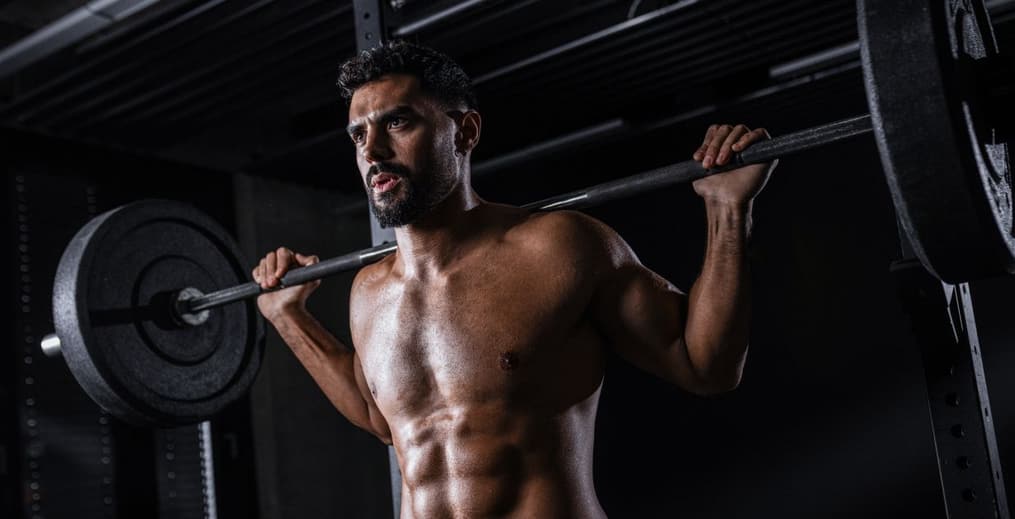
Performance training and training for aesthetics require different workouts, nutrition, and progress tracking. While both involve exercise, the intention behind each training style is very different.
Understanding the difference matters because many people unintentionally mix strategies from both approaches, which can slow progress and create frustration.
Training for performance vs. aesthetics
Training for performance focuses on what your body can do – getting stronger, faster, more powerful, or going further. Training for aesthetics focuses on how your body looks – building muscle definition, reducing body fat, and shaping specific areas.
When you clearly define your objective, you can train more efficiently, choose the right nutrition strategy, and track progress in a way that actually reflects your goals.

Defining your fitness goals
Before choosing a training style, you need to define your fitness goals. Do you want to lose weight, build muscle, or improve your overall health? This starting point is important because it determines everything from exercise selection to recovery needs.
Without a specific goal, workouts become random, and results become inconsistent. Research shows that goal setting improves exercise adherence, motivation, and long-term success.1
Performance Goals | Aesthetic Goals |
|
|
Program Focus: Training for performance vs aesthetic
Programs for performance prioritize measurable outputs, like a faster 5k time. Workouts are designed to progressively improve these attributes. Exercise routines are created based on function rather than appearance.
Programs for aesthetics prioritize physical appearance, or how you look. The goal is to influence muscle size, shape, and overall body composition.
Performance Programming Focus | Aesthetic Programming Focus |
|
|
The goals you choose then influence the following elements of your training plan:
- Exercise selection
- Workout structure
- Rep ranges and intensity
- Rest periods
- Nutrition strategy
- Recovery needs
- How progress is measured
Key differences between the two training approaches
While both styles improve your body, their physiological focus is different:2
- Performance Training: Prioritizes movement efficiency, explosive power, and total force output.
- Aesthetic Training: Focuses on localized muscle stimulus, metabolic stress, and hypertrophy (muscle growth).
Essentially, performance training is about what your body can do, while aesthetic training is about how your body looks.
Types of workouts or exercises you choose
Below are some examples of the type of workouts or exercises that you’d typically find in a workout program geared toward performance vs. aesthetics.
Performance workouts | Aesthetic workouts |
|
|
Training volume and intensity of workouts
Both approaches use progressive overload in terms of weight, reps per set, and overall intensity, but the mechanisms differ. Performance training increases output – training your body to be more powerful and handle more load.
Aesthetic training increases muscle stimulus, maximizing muscle stress to trigger growth – it prioritizes how a muscle looks over how much it can move.3
The chart below shows how these differing objectives translate into adjustments in your training session.
Performance Volume & Intensity | Aesthetic Volume & Intensity |
|
|
Workout frequency
Training for performance often emphasizes recovery to allow for adaptation, whereas training focused on aesthetics often increases frequency to stimulate growth.
Performance Workout Frequency | Aesthetic Workout Frequency |
|
|
Exercise and workout variety
Performance and aesthetic-focused training also differ in how workouts are structured and progress over time.
Performance training is typically more structured with repeatable movements, while aesthetic training often uses more variety to target specific muscle groups.
Performance Variety | Aesthetic Variety |
|
|
How progress is measured
Performance progress is measured using objective metrics, while aesthetic progress is measured using appearance-based metrics. Here are some examples of what these could be:
Performance Progress | Aesthetic Progress |
|
|
Differences in fueling for performance vs. aesthetics
Whether you’re training for performance or aesthetics, nutrition plays a major role in achieving the results you want.
Training alone isn’t enough to drive significant change, and your specific nutritional needs will differ depending on whether you’re training to push yourself to the max or to solely improve your appearance.
Nutritional differences
Both goals are heavily dependent on fueling correctly. But there are differences in how to use nutrition to help achieve progress for each goal.
While both approaches can benefit from a high-protein diet to support muscle repair and growth, the way in which you manipulate calories and macronutrients will differ to match your training objective.
Performance Nutrition Focus | Aesthetic Nutrition Focus |
|
|
Mindset differences
The way in which you manipulate your diet is just one piece of the puzzle. There is also a difference in mindset towards nutrition in training for performance vs. aesthetics.
For performance, nutrition is like gas to a car – you need to make sure your tank is full to push hard. With aesthetics, it’s more like fine-tuning and sculpting a piece of art; carefully adjusting each detail at a time to achieve the look you want.
Performance Nutrition Mindset | Aesthetic Nutrition Mindset |
|
|
How to decide which one is right for you
Deciding whether to train for performance vs. aesthetics depends on your fitness level and personal goals. Here are a few helpful tips to decide which one is right for you:
Step 1: Use a SMART goal:
- Specific
- Measurable
- Achievable
- Relevant
- Time-bound
Examples:
- Increase Squat by 20 kg in four months.
- Lose four kilograms of body fat in 12 weeks.
- Run a sub-25-minute 5K.
Step 2: Think about lifestyle and how you like to work out:
Do you enjoy lifting heavy?
Do you enjoy higher volume workouts?
Do you prefer measurable performance metrics?
Do you prefer visual physique goals?
Your preferences influence whether you will consistently show up and stay on track, which directly impacts results.
Step 3: Consider time availability:
Performance training may require structured programming, longer rest periods, and skill development.
Aesthetic training may require more total volume, multiple weekly sessions, and accessory exercises.
Step 4: Consider nutrition preference:
Are you comfortable tracking food?
Do you prefer eating for energy vs. physique?
Are you okay with calorie deficits or surpluses?
Step 5: Hybrid is an option
Many people benefit from training like a hybrid athlete, which combines strength performance goals, hypertrophy work, and body-composition focus.
This approach allows you to build strength while improving your physique. However, results in any given area are generally slower compared to choosing one to focus on for a period of time.

Let’s recap
Training for performance and training for aesthetics both improve fitness, but they prioritize different outcomes. You don’t have to commit exclusively to one – in fact, you can even cycle through different goals throughout the year.
But you do need to have a clear focus so that all of your efforts don’t leave you without results or with stalled progress.
And choosing the right approach starts with defining your goals, considering your lifestyle, and deciding how you want to measure success. To put it simply, your training should align with what you want to achieve.
When your workouts, nutrition, and progress tracking come together, results become more predictable and sustainable. Define your objective, choose the approach that fits your lifestyle, and stick with it. Trust us, results will follow.
Try Freeletics nowYou might also be interested in:


Sources
[1] Locke, E. A., & Latham, G. P. (2002). Building a practically useful theory of goal setting and task motivation. American Psychologist, 57(9), 705–717
[2] Schoenfeld, B. J. (2016). Science and development of muscle hypertrophy. Human Kinetics.
[3] Suchomel, T. J., Nimphius, S., & Stone, M. H. (2016). The importance of muscular strength in athletic performance. Sports Medicine, 46(10), 1419–1449