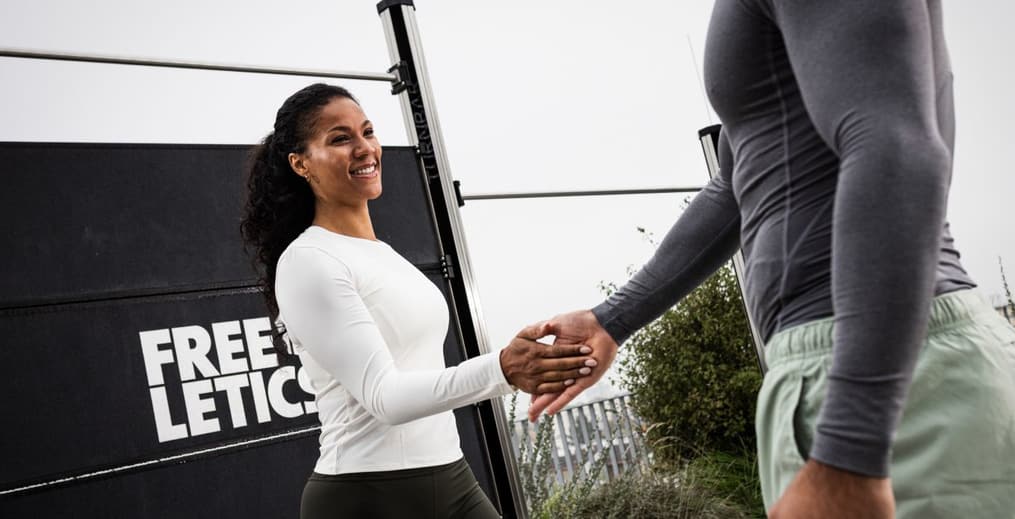
Psychologically, play is simple: it's something you choose to do because it's fun, not because of what it gets you. Physically, that looks like spontaneous, unstructured movement without fixed rules or expectations.
Research suggests that playful behavior can trigger the release of endorphins while reducing cortisol, the body's main stress hormone. The result is lower stress, a better mood, and movement that feels rewarding in the moment.2
Think back to when you were a kid. You ran, you climbed, you roughhoused, you moved, simply because it felt good. Nobody had to talk you into it – you just did.
Then, somewhere along the way, that changed. Movement stopped feeling like play and started feeling like a task. “I get to move” became “I have to work out.” And that's usually right where exercise feels like another item on the to-do list and even the best training plans start to fall apart.
Here's the good news: it's reversible. When you bring play back into your training, exercise stops feeling like an obligation. It may sound simple, but it's far from trivial. It's often the difference between still training in a year and giving up after a few months.
And whether you're new to fitness or have been working out for years, the research keeps pointing to the same thing: discipline isn't what keeps people moving long-term. Enjoyment is.
In this article, we’ll explore what play actually is, what the science says it does for your training, and easy ways to get more of it into your routine.
What is play, exactly — and why isn't it just for kids?
Play is movement for the pure sake of enjoyment, or put simply, because it is fun. But that doesn’t mean every activity is play. What sets play apart from sports, exercise, or even a relaxed walk is its purpose.
Sports have rules and usually a competitive goal. Exercise is chasing a specific outcome, like building more strength or improving endurance. And while a walk can be wonderful, it isn’t necessarily playful. Play, on the other hand, doesn't need a goal beyond the moment itself. It might look like dancing in your kitchen, climbing something you probably shouldn't, or a game of tag with friends.
The real difference comes down to motivation, or why you’re doing it. Researchers call it intrinsic motivation when you do something because it's enjoyable, versus extrinsic motivation, where motivation is driven by an external reward or outcome, like losing weight or getting fit.
Research suggests that while extrinsic goals often motivate people to start working out, they're less effective at keeping people going. A widely cited systematic review by Teixeira and colleagues found that long-term exercise adherence is much more strongly linked to intrinsic motivation.1 In other words, genuinely enjoying the activity is one of the biggest predictors of whether you'll still actually stick with your workout plan.
So play isn't kid stuff. It's closer to the lever that motivation actually hangs on.
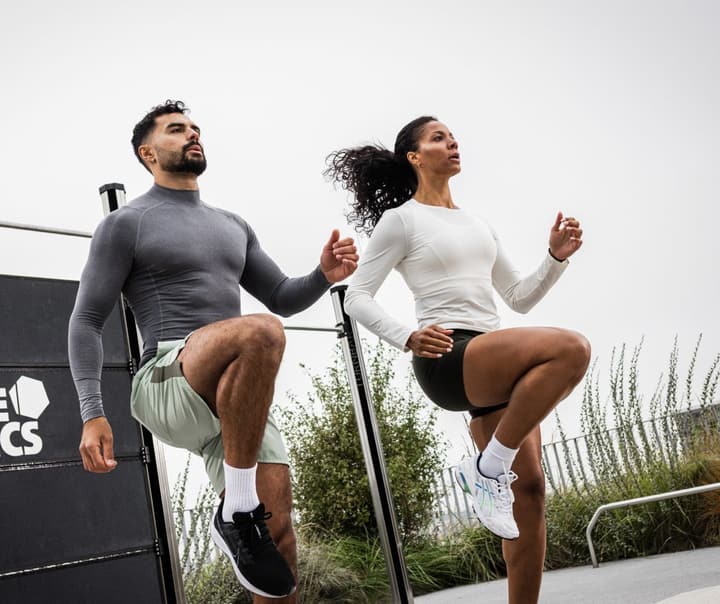
Why does play matter so much for adults?
Play isn’t just about fun – something measurable happens in your brain and body when you play. And the release of endorphins and drop in cortisol, the body’s primary stress hormone, aren’t the only benefits.
People who describe themselves as more playful also tend to reach for healthier coping strategies, like acceptance or reframing, when things get stressful — a pattern documented by Magnuson and Barnett in their research on playfulness and stress.2
And the benefits aren’t limited to children. A study exploring play experiences among young adults found a similar pattern: people who engage in more play in their daily lives tend to show greater resilience, largely through increased positive emotions and emotional intelligence.3
Part of the explanation is flow — that state where you're so absorbed in something that overthinking and self-criticism just fade out. That shift in perspective is exactly what turns “I have to” into “I get to.”
In short, play pulls your brain out of task-completion mode and into a state where movement feels light again. And like any skill, that state is trainable.
What are the benefits of bringing play into your fitness routine?
Your body actually changes. Constantly trying new, varied movement patterns — which is basically what play looks like — challenges your brain in a way that repetitive training just doesn't. Research from Lakhani and colleagues found that learning new movements produces measurable structural changes in the brain even in adulthood, including in white matter.4 Practicing a variety of movements instead of the same drills also helps you retain what you've learned and apply it elsewhere.4 The payoff: better coordination, faster reactions, more mobility — not just improvements in strength or endurance.
Your mind benefits, too. As we’ve seen, play can act as a natural stress buffer.2 After a rough day at work, a playful session can help you decompress more effectively than another rigid, joyless routine.
And consistency becomes easier. A meta-analysis by Mazeas and colleagues, pooling 16 studies and more than 2,400 participants, found that gamifying exercise by adding points, levels, or small challenges measurably increases how much people actually move.5 While that effect fades somewhat over time, it’s still detectable months later.5 Put simply: the more fun a workout is, the less willpower the next one takes.
The effects can last. Because intrinsic motivation is one of the strongest predictors of long-term adherence1, play isn't a nice bonus – it’s a powerful tool for preventing workout burnout and staying consistent over time. And when you associate movement with feeling good, you stop having to force yourself into it.
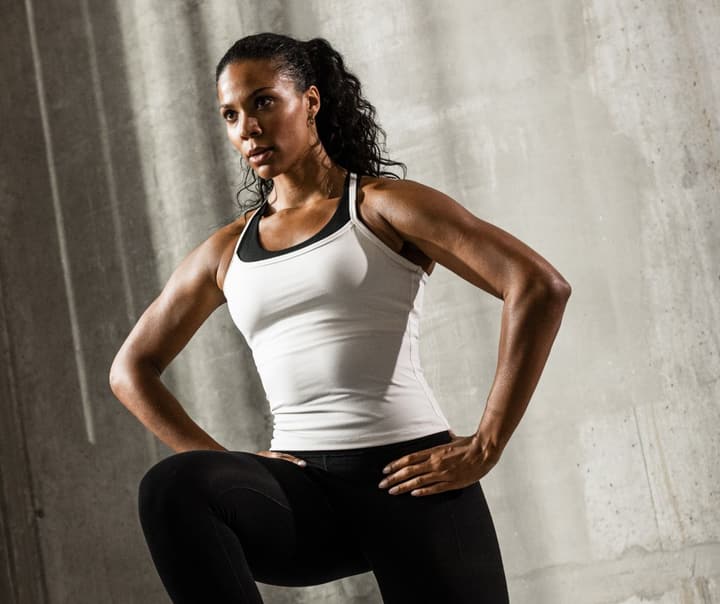
What do fun, play-based workouts actually look like?
You don't need a playground. Here are a few fun and easy ways to stay active:
- Movement snacks: short, spontaneous bursts of activity spread throughout the day — climbing stairs, a few Squats, a quick dance break. A recent review in the British Journal of Sports Medicine found that just two five-minute bursts of activity a day meaningfully improved heart and lung function in previously inactive adults, with an adherence rate above 90%.6
- Gym games: partner drills with reaction challenges, friendly competitions with your crew, a DIY obstacle course in the park – they all count.
- Fun cardio: dance workouts, a game of tag, shooting hoops. Get creative with your Zone 2 cardio — it can be so much more than logging miles on a treadmill.
- Playful strength training: Plank-hold challenges, Pushup duels, or a circuit where the roll of a dice determines the next exercise. There are countless ways to bring games to your gains.
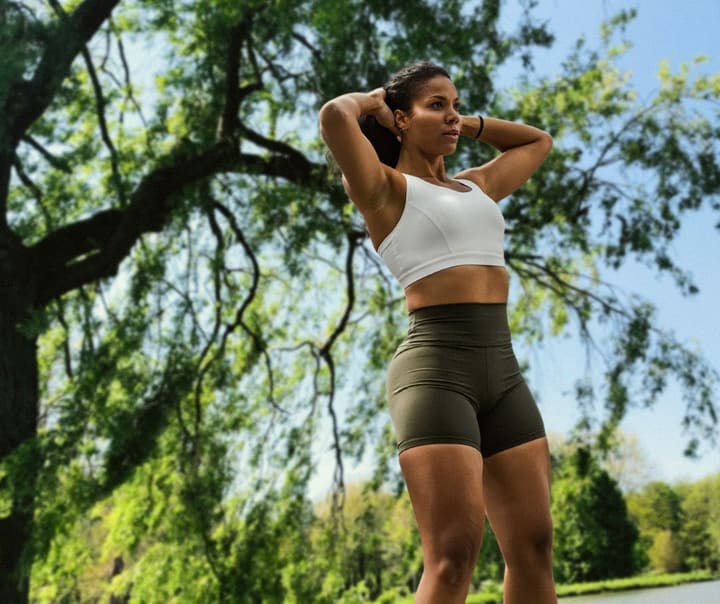
How can you add more play to your fitness routine?
Take it outside. Outdoor exercise has a measurably stronger effect on mood and self-esteem than working out inside. And the effect is even stronger near water, according to the well-known analysis by Barton and Pretty.7 Swapping the treadmill for a trail run is often enough.
Refresh your playlist. New, high-energy music can make a familiar workout feel new again — a small trick that works surprisingly well. Try a genre you'd never normally reach for.
Train with others. Back in the early 1990s, Spink and Carron found that people who feel a sense of belonging in their training group stick with it far longer than those going it alone.8 Working out with friends isn't just more fun; it keeps you accountable — even one standing weekly session with a training partner can make a real difference.
Learn a new skill. Rock climbing, dance, or trying a new sport are all great examples of some of the best hobbies to stay active. Whatever you pick, unfamiliar movement patterns challenge your brain and make progress feel tangible4, exactly the ingredients needed to make something feel like play. And being clumsy at first is part of the process. It's a sign you’re learning, not a sign you're “not athletic enough.”
Let’s recap
Play might be one of the most effective tools there is for turning “I have to work out” back into “I want to move.” The science is unusually consistent here: enjoyment beats sheer discipline when it comes to long-term consistency.
And you don't need to overhaul your whole fitness routine to bring more play into your training. Exploring fun ways to exercise can start with one simple shift: turning a set into a game, replacing a countdown with a challenge, or simply finding a way to move that makes you smile.
The reward isn't just a fitter body — it's building a habit that actually sticks.
Try Freeletics nowYou might also be interested in:


FAQ
How do I make exercise fun?
The simplest way to make exercise fun is to shift your focus from results, like weight loss, to enjoyment in the moment. Change the format: train outside, with other people, or mix in game-like elements instead of sticking to a rigid plan.
How can I actually enjoy working out instead of just pushing through it?
You can enjoy working out more by treating it like play. Focus on how movement feels in the moment rather than only the result afterward. That simple mental shift strengthens your intrinsic motivation.
What are movement snacks, and how do they help?
Movement snacks are short, spontaneous bouts of activity, just a few minutes long, that fit easily into your day and are proven to improve fitness.6
Do I need special equipment for play-based training?
No. Most playful exercises or play-based training, from movement snacks to a game of tag, require no special equipment. All you need is some space and your bodyweight.
Sources
[1] Teixeira, P. J., Carraça, E. V., Markland, D., Silva, M. N., & Ryan, R. M. (2012). Exercise, physical activity, and self-determination theory: A systematic review. International Journal of Behavioral Nutrition and Physical Activity, 9, 78.
[2] Magnuson, C. D., & Barnett, L. A. (2013). The playful advantage: How playfulness enhances coping with stress. Leisure Sciences, 35(2), 129–144.
[3] Frontiers in Psychology (2022). Influence of play on positive psychological development in emerging adulthood: A serial mediation model.
[4] Lakhani, B., Borich, M. R., Jackson, J. N., Wadden, K. P., Peters, S., Villamayor, A., MacKay, A. L., Vavasour, I. M., Rauscher, A., & Boyd, L. A. (2016). Motor skill acquisition promotes human brain myelin plasticity. Neural Plasticity, 2016, 7526135.
[5] Mazeas, A., Duclos, M., Pereira, B., & Chalabaev, A. (2022). Evaluating the effectiveness of gamification on physical activity: Systematic review and meta-analysis of randomized controlled trials. Journal of Medical Internet Research, 24(1), e26779.
[6] Rodríguez, M. Á. et al. (2025). Systematic review of “exercise snacks” and cardiorespiratory fitness in physically inactive adults. British Journal of Sports Medicine.
[7] Barton, J., & Pretty, J. (2010). What is the best dose of nature and green exercise for improving mental health? A multi-study analysis. Environmental Science & Technology, 44(10), 3947–3955.
[8] Spink, K. S., & Carron, A. V. (1992). Group cohesion and adherence in exercise classes. Journal of Sport & Exercise Psychology, 14(1), 78–86.
