Regeneration is the amount of time your body uses to recover after intense workouts. This recovery period plays a crucial role in muscle growth, repair, and your athletic performance. During regeneration, your muscles and connective tissue rebuild stronger, your energy levels are replenished, and your body resets, preparing you for your next workout.
In this article, we’ll explain why recovery days are so important, what happens inside your body during regeneration, and how you can proactively use your rest days to stimulate muscle growth and repair. Let’s dive in!
Why regeneration matters for your workouts
More training, more results? That’s not actually how it works. And to understand how your body adapts to exercise and you get stronger, it’s first important to break down the physiology of recovery.
Intense workouts – whether resistance training, strength training, or endurance training – place a significant physiological stress on your muscles, which often leads to muscle fatigue.
This fatigue causes tiny tears in your muscle fibers, called microtrauma. Though “microtrauma” might sound concerning, it’s actually a vital stimulus for muscle adaptation.
During the recovery process, i.e., when you are not working out, your muscles repair these small tears, your body adapts – leading to an increase in muscle growth and strength, namely your performance.
This process is often described by the supercompensation model,¹ which shows how performance can improve when training is balanced with enough recovery.
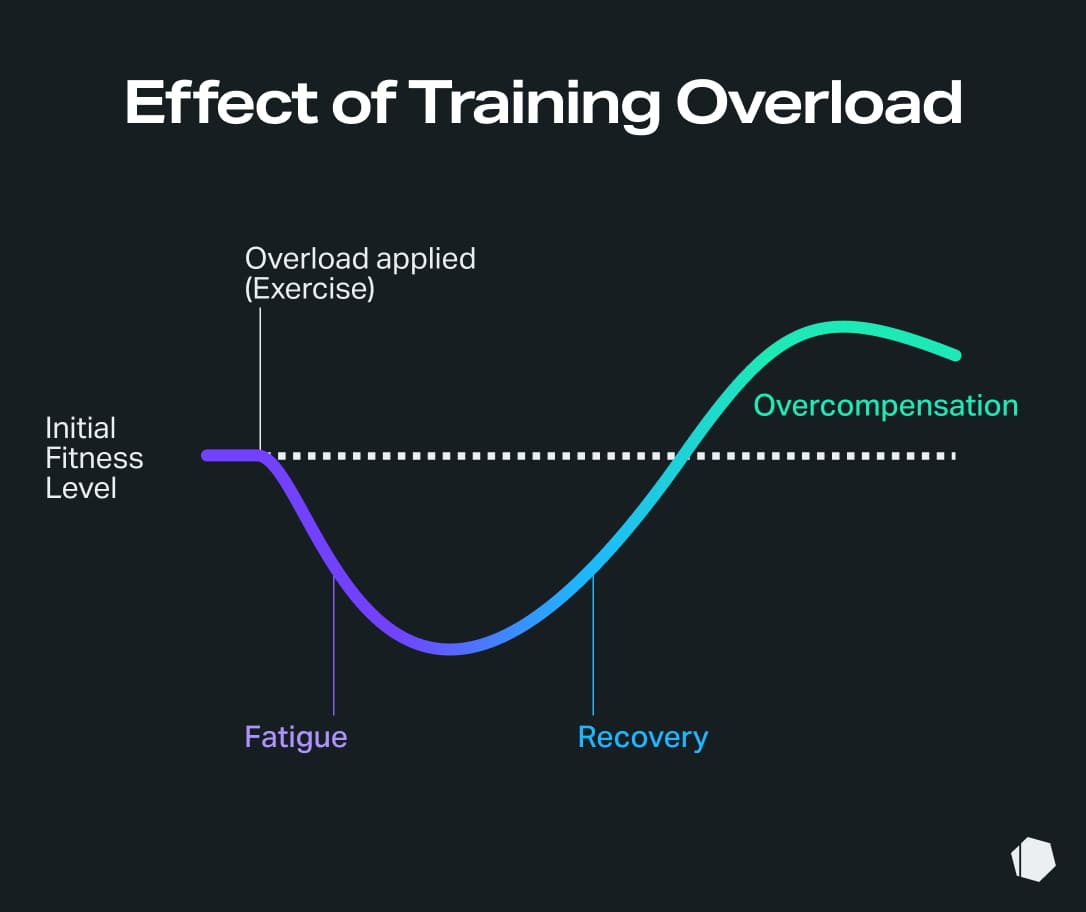
While the training provides the initial stimulus, the supercompensation takes place during the non-training phase – the regeneration phase.
And it’s incredibly important to allow for adequate recovery and not do another tough workout too soon, because it can actually weaken your muscles and increase your risk of injury.
The good news: you can actively support this regeneration process, so you can bounce back quicker! Let’s get into the secret sauce to fast-track your regeneration.
The importance of sleep for recovery
Having a solid sleep routine is vital to your fitness success because quality sleep plays a crucial role in post-workout recovery and muscle repair.
During deep sleep, when muscle contraction is minimal, the body releases growth hormone, which aid in muscle repair, tissue regeneration, and metabolic processes.
At the same time, other bodily functions slow down, allowing your body to fully repair the damaged muscle tissues.
That means, yes, the quality of your sleep directly impacts the quality of your muscle regeneration, which ultimately determines your recovery time.²
This is exactly why maintaining a sleep routine – going to bed and waking up at the same time – combined with practicing good sleep hygiene, is so important.
This consistency habit improves the quality of your sleep over the long term by helping your body regulate and optimize the recovery processes vital for muscle repair and overall regeneration.³

Eat right to support regeneration
What you eat after a workout is another key component to your muscle recovery and regeneration, which is why optimizing both your pre- and post-workout nutrition is essential.
Know that intense hunger you sometimes feel after a workout? It’s because your muscles are demanding nutrients to repair and build. Here’s what to keep in mind to boost your recovery:
Protein for muscle repair
Protein is king when it comes to post-workout recovery. In fact, research shows that getting in enough protein in the hours surrounding your workout helps your muscles adapt and repair more effectively.4
Why? Your body breaks protein down into amino acids, which in turn are the building blocks of muscle fibers.
So without protein, those microtraumas created from your workout cannot be repaired, or the process is at least slowed down, because the body has fewer amino acids available for muscle protein synthesis.
Vitamins and minerals also matter
Protein is not the end all be all for regeneration. Micronutrients, like vitamins and minerals, help your body absorb nutrients and ensure the release of hormones, which are required during the recovery process.
Aim for a well-balanced diet rich in whole foods like fresh fruits and vegetables to get in these micronutrients and support the recovery process.
Timing also matters
In addition to “what” you eat, the “when” is just as important. Immediately after exercise, your body needs protein and, depending on your training intensity, carbohydrates.
Carbohydrates help replenish depleted glycogen stores, which fuel your muscles, preparing them for your next workout.

Get a bedtime boost
Before bedtime, give your body an extra dose of protein and micronutrients. Muscle repair and regeneration continue for several days after an intense training – yes, even on rest days!
However, this isn’t a free-for-all – make sure you’re not overeating, as an overly full stomach is not conducive to a good night's sleep. Find that sweet spot where you’re not feeling hungry or full.
Pro tip: Try some Greek yogurt for your nightcap to get in your protein and also some key nutrients that help with falling asleep.
Plan active regeneration into your workout plan
Active regeneration should be a key component of your training program. Immediately after your workout, it’s recommended to complete a proper Cooldown to help your body slowly return to its pre-exercise state, bringing your heart rate and breathing rate back to normal.
Stretching post-workout can help reduce the feeling of muscle stiffness and support your mobility, which can improve how you feel going into your next session.
What you do on your rest days can help
Even on rest days, gentle stretching and light movement like yoga can help aid in the recovery process.
Heat therapies like saunas and hot baths can also stimulate blood flow, enhancing oxygen and nutrient delivery to muscle cells. Even a light jog can be beneficial!
Just be careful not to overdo it. Stick to an intensity you and your body are used to. Remember, it’s still meant to be a rest day, so treat it as such.
Don’t forget hydration
It’s often overlooked, but hydration is just as important post-workout! That’s because every metabolic process that takes place in the body depends on water.
And when you’re dehydrated, it can significantly slow down all of these processes, which ultimately impacts your performance and how well you recover.
Let’s recap
While your body naturally recovers over time, you can actively help speed up the regeneration process with smart habits.
Focus on nailing your nutrition with a nutrient-rich, whole foods diet and prioritizing high-quality sleep.
Don’t forget to include a proper Cooldown after every workout, and use your rest days to stretch, stay active, and focus on those mobility exercises you’ve been meaning to do.
By consistently following these steps, you’ll be rewarded with less muscle soreness, reduced fatigue, and improved athletic performance. You’ll move better, feel better, and achieve PBs you never thought possible, all while supporting your body and overall health.
You might also be interested in:
Sources
[1] Schoenfeld B. J. (2010). The mechanisms of muscle hypertrophy and their application to resistance training. Journal of strength and conditioning research, 24(10), 2857–2872.
[2] Kaczmarek, F., Bartkowiak-Wieczorek, J., Matecka, M., Jenczylik, K., Brzezińska, K., Gajniak, P., Marchwiak, S., Kaczmarek, K., Nowak, M., Kmiecik, M., Stężycka, J., Krupa, K. K., & Mądry, E. (2025). Sleep and Athletic Performance: A Multidimensional Review of Physiological and Molecular Mechanisms. Journal of Clinical Medicine, 14(21), 7606.
[3] Chen, Y., Cui, Y., Chen, S., & Wu, Z. (2017). Relationship between sleep and muscle strength among Chinese university students: a cross-sectional study. Journal of musculoskeletal & neuronal interactions, 17(4), 327–333.
[4] van Loon L. J. (2013). Role of dietary protein in post-exercise muscle reconditioning. Nestle Nutrition Institute workshop series, 75, 73–83.