Cholesterol is a waxy, fat-like substance that’s produced by the liver and is a product of animal-based foods, such as meat and eggs. It is essential for producing cells, hormones, and vitamin D.1
And while cholesterol has earned a poor reputation, it is not inherently bad. In fact, cholesterol is essential for life, playing an important role in hormone production, athletic performance, and recovery.
Here, we’ll break down what cholesterol is, why you need it, and bust some of the most common myths surrounding it.
What exactly is cholesterol?
There are different types of cholesterol; some are good, and some are bad, and if these are out of balance, it can contribute to poorer health.
Types of cholesterol
To travel around the body via your bloodstream, cholesterol has to attach to proteins, making lipoproteins. The main types are:
- High-density lipoprotein (HDL) - This is often referred to as “good” cholesterol because it transports excess cholesterol from the bloodstream back to the liver to be removed from the body.
- Low-density lipoprotein (LDL) - This is known as “bad cholesterol” and transports cholesterol to cells. However, if excess plaque builds up in the artery walls, it leads to a condition called atherosclerosis.
- Triglycerides - A type of fat that can be used as an energy source, but high triglyceride levels can coincide with high levels of LDL, increasing the risk of heart disease.
How is cholesterol produced?
Your body makes around 80% of the cholesterol found in your bloodstream, while the remaining 20% comes from the food you eat.2
The liver is the primary cholesterol production site, so even if you eat no dairy products or other animal-based foods, your body will still produce what it needs.

How do diet and exercise affect cholesterol levels?
Diet and exercise can improve your cholesterol levels by lowering LDL and increasing HDL.
For example, a diet that contains little saturated fat and is high in fiber, combined with regular aerobic exercise, can significantly lower bad cholesterol levels.
One study found that a diet low in saturated fats and cholesterol and high in healthy polyunsaturated fats (found in foods such as walnuts, flaxseeds, and fish) led to a 14% reduction in blood cholesterol levels.3
What other factors impact cholesterol levels
Beyond diet and exercise, both lifestyle factors and even genetics can affect the amount of cholesterol circulating in your blood.
- Lifestyle factors - Things like sleep, stress, and overall body composition can influence cholesterol. For example, poor sleep and chronic stress can increase cortisol, which negatively impacts fat metabolism, while losing weight and reducing body fat are associated with improved LDL and triglyceride levels.4
- Genetics - Some people inherit higher cholesterol levels from their parents, with conditions like familial hypercholesterolemia significantly increasing LDL levels regardless of lifestyle.5
Good vs bad cholesterol: is it that simple?
The labels “good” and “bad” cholesterol are oversimplified.
HDL (good) cholesterol is beneficial because it helps to remove excess cholesterol from your blood, transporting it to the liver, where it can be recycled or removed from the body.
People with HDL levels above 60 mg/dL in their blood have a lower risk of coronary heart disease (CHD) than those with 40 to 60 mg/dL. Yet, this group had a lower risk than those with HDL levels below 40 mg/dL.
LDL (bad) cholesterol, on the other hand, becomes problematic when:
- levels are chronically high
- LDL particles are small and dense
- oxidative stress and inflammation are also present
LDL is considered harmful when your levels are above 100 mg/dL – and a level of 150 mg/dL or higher is often considered borderline high – because high amounts can cause a buildup of plaque on artery walls, increasing the risk of heart attack and stroke. 6

Why is cholesterol important for athletes?
Cholesterol is especially important for athletes because it is a building block for cell membranes and for steroid hormones, such as testosterone, which are crucial for muscle growth, repair, and recovery.
One study found that athletes with higher dietary cholesterol intake achieve the greatest gains in muscle strength and mass,7 and the researchers suggested that cholesterol is key to muscle repair processes.
Cholesterol is also a precursor, or foundational building block**,** for the natural production of vitamin D. The cholesterol derivative, 7-dehydrocholesterol (7-DHC), is present in the skin and is naturally converted to vitamin D3 when exposed to ultraviolet B (UVB) light from the sun.8 Vitamin D has multiple benefits for athletes, including:
- bone and muscle health
- increased physical performance
- greater exercise capacity9
In short, cholesterol plays several important roles in helping athletes perform at their best.
What is a healthy cholesterol level?
According to the NHS,10 healthy total cholesterol levels should be as follows, based on a standard blood test for healthy adults:
Type | Level (mmol/L) | |
| Total cholesterol | <5 | |
| LDL | <4 | |
| HDL | Men | >1 |
Women | >1.2 | |
| Triglycerides | 0.5 - 1.7 (fasting levels) | |
Debunking the common myths about cholesterol
Cholesterol has a branding problem, which means everyone assumes it is inherently bad. This has paved the way for many common myths to be circulated. Here, we bust some of the most common ones.
Avoid eggs, they’re bad for you
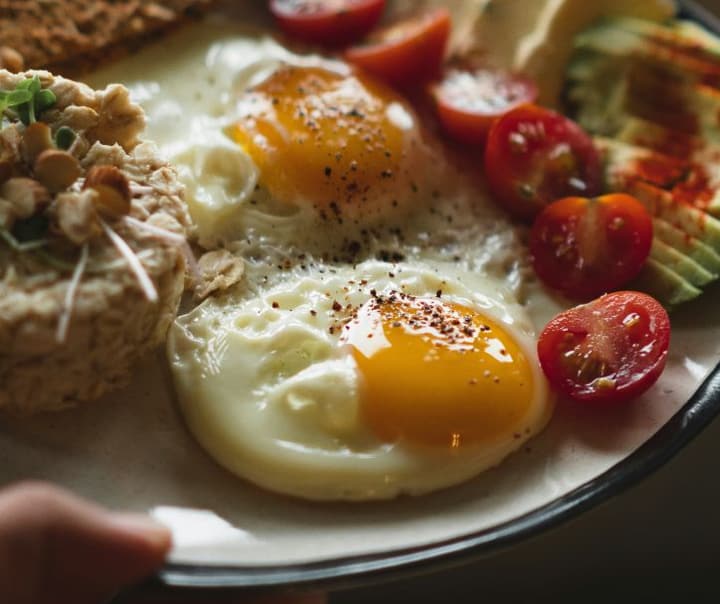
A large egg yolk is one of the richest sources of cholesterol, containing around 200 mg. However, eggs also contain lipid-lowering nutrients that can lower the risk of heart disease, and they’re also rich in protein, choline, and other micronutrients your body needs to stay healthy.
So, cutting out eggs completely isn’t a good idea, especially for athletes, because for most people, the dietary cholesterol in eggs has a limited impact on blood cholesterol levels. They’re also a great recovery food.
Everyone should avoid red meat
Not necessarily. Red meat is a rich source of iron, zinc, vitamin B12, and protein – nutrients your body needs to thrive. Although excessive intake of processed meat could raise your risk of cardiovascular disease, a moderate intake of lean cuts of red meat can be part of a balanced diet.
5 tips for using cholesterol to your advantage
Cholesterol management isn’t about restriction – it’s about strategy. As an athlete, your goal isn’t to eliminate cholesterol, but to optimize it for performance, recovery, and long-term cardiovascular health. Small, consistent lifestyle choices can significantly influence your lipid profile over time.
Here’s how to optimize your levels:
- Train consistently - both aerobic and resistance training can improve blood lipid levels.
- Choose healthy fats - don’t forget to eat enough healthy fats from sources like olive oil, nuts, seeds, and oily fish.
- Increase your soluble fiber intake - sources like oats, lentils, and legumes can help lower circulating LDL levels.
- Prioritize sleep - poor sleep can disrupt lipid metabolism by increasing cortisol levels. Aim to get 8 hours of sleep each night.
- Manage stress - chronic stress can alter your hormone balance, directly affecting cholesterol levels.
Let’s recap
Cholesterol isn’t the enemy it was once made out to be. It’s essential for hormone production, recovery, and cellular health. Although high LDL levels carry health risks, maintaining balance is key.
Understanding your cholesterol is just one piece of building a stronger, healthier body. The real change happens when knowledge meets action. By optimizing your lifestyle, you can make cholesterol work for you and support long-term health.
And it doesn’t have to be complicated: move your body, eat a well-balanced diet rich in whole foods and healthy fats, prioritize sleep, and manage your stress.
Train smarter. Track your progress. Build a body that performs – and lasts.
Try Freeletics nowYou might also be interested in:


Sources
[1] Huff T, Boyd B, Jialal I. Physiology, Cholesterol. [Updated 2023 Mar 6]. In: StatPearls [Internet]. Treasure Island (FL): StatPearls Publishing; 2025 Jan-.
[2] Corliss, J. (2026). How it’s made: Cholesterol production in your body.
[3] Enkhmaa B, Surampudi P, Anuurad E, et al. Lifestyle Changes: Effect of Diet, Exercise, Functional Food, and Obesity Treatment on Lipids and Lipoproteins. [Updated 2018 Sep 11]. In: Feingold KR, Adler RA, Ahmed SF, et al., editors. Endotext [Internet]. South Dartmouth (MA): MDText.com, Inc.; 2000-.
[4] Sun, J., Zhang, Z., Liu, Z., Li, J., & Kang, W. (2022). The Correlation of Total Percent Fat With Alterations in Cholesterol and Triglycerides in Adults. Frontiers in nutrition, 9, 881729.
[5] Pejic R. N. (2014). Familial hypercholesterolemia. Ochsner journal, 14(4), 669–672.
[6] Libby, P et al., (2019). Atherosclerosis. Nat Rev Dis Primers 5, 56 (2019).
[7] Texas A&M University. (2008, January 10). Surprise -- Cholesterol May Actually Pose Benefits, Study Shows. ScienceDaily. Retrieved February 23, 2026
[8] Bikle DD. Vitamin D: Production, Metabolism, and Mechanism of Action. [Updated 2025 Jun 15]. In: Feingold KR, Adler RA, Ahmed SF, et al., editors. Endotext [Internet]. South Dartmouth (MA): MDText.com, Inc.; 2000-.
[9] Shuler, F. D., Wingate, M. K., Moore, G. H., & Giangarra, C. (2012). Sports health benefits of vitamin d. Sports health, 4(6), 496–501.
[10] NHS (2022). Cholesterol Levels.
