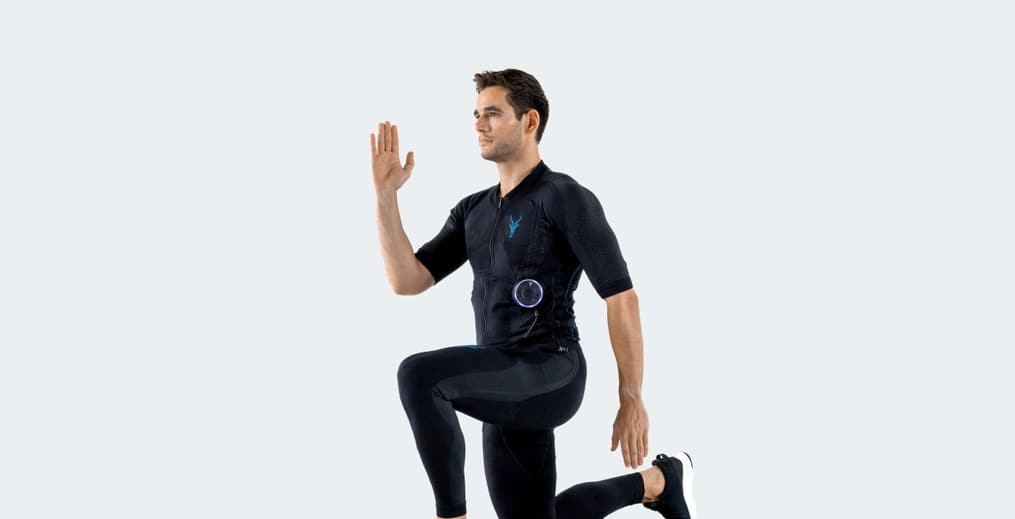
Are you craving just a little bit more? More sweat. More effort. More results in less time? That's exactly why we teamed up with Antelope (by Beurer) to bring 9 new EMS (electrical muscle stimulation) workouts to the Freeletics app, powered by the Evolution EMS Suit.
EMS delivers controlled electrical impulses that work alongside your body's own nerve signals, intensifying muscle contraction during each rep. Paired with our signature Freeletics bodyweight exercises, you can push harder in less time – whether you're looking for an extra challenge or just need a shorter session to count for more.
Here's what's new, how it works, and everything you need to know before you add an EMS suit to the mix.
EMS workouts at a glance:
Here's what's new:
- 9 new Freeletics x Antelope on-demand workouts across four categories: Core, Upper Body, Lower Body, and Full Body.
- Three levels: Beginner, Intermediate, and Advanced, so there’s truly a workout for every Free Athlete, no matter where you're starting from
- Built to pair with an Antelope Evolution EMS suit
What is EMS training?
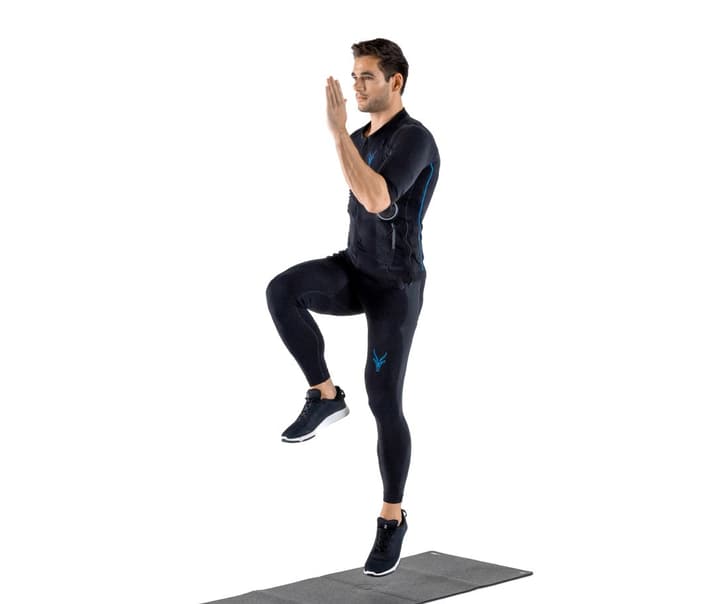
EMS training, or electrical muscle stimulation, uses controlled electrical impulses to stimulate your muscles, and it’s applied on top of the signals your body naturally sends to your muscles.1 Normally, your nervous system determines how many muscle fibers to recruit for a given movement.
EMS adds another layer of stimulation, helping activate more muscle fibers during the same exercise.
And while EMS might sound like the latest fitness fad to hit the scene, the technology has actually been around for decades. A similar form, often referred to as NMES in clinical settings, has long been used in physical rehabilitation to help patients safely rebuild strength after injury or surgery.2
When paired with your existing training, EMS is designed to add intensity, not replace the work.
Why pair EMS with bodyweight training?
Bodyweight training, often called calisthenics, is already one of the most effective ways to build strength and muscle. The key driver here is progressive overload, or continually increasing the challenge so your muscles keep adapting.
Normally, that means adding reps, slowing your tempo, or moving to a harder variation. An EMS suit adds another lever: intensity. As we mentioned above, it layers on that extra stimulation to your muscles that are already working, so the same movement asks more of you.
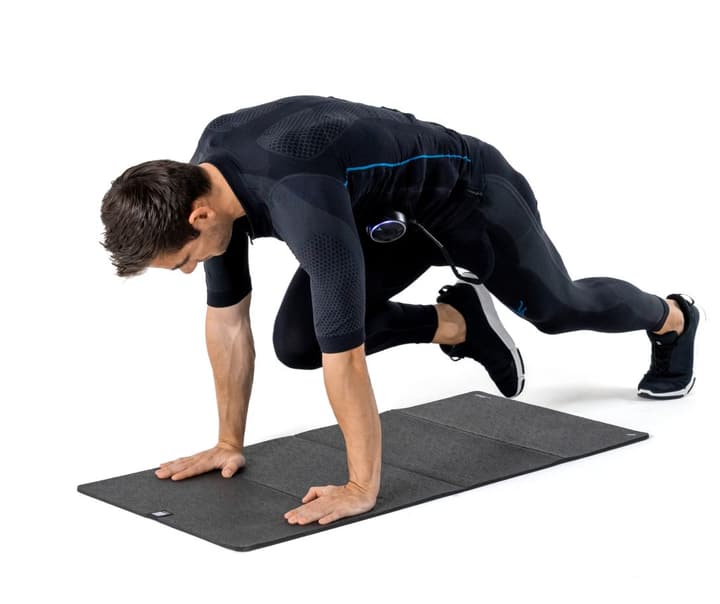
And that's exactly how these 9 new workouts were built. A static hold like a Plank feels a lot tougher when your muscles are already firing from the added EMS stimulation. Diamond Pushups demand even more control with that extra activation working underneath the movement.
Combine EMS with a bodyweight circuit like this, and you've stacked two forms of resistance into one session. This power combo makes it possible to get more out of every workout and make your training time count, even on your busiest days.
What are the new Freeletics x Antelope EMS workouts?
Together with Antelope, we’re bringing you a variety of workouts at different levels, so there’s something for everyone.
Take a look below at what exactly has been added:
| Workout | Category | Level | Focus |
|---|---|---|---|
| Core Builder | Core | Beginner | Core stability |
| Core On Fire | Core | Intermediate | Obliques & deep abs |
| Chest Quest | Upper Body | Intermediate | Chest & arms |
| Push It To The Limit | Upper Body | Advanced | Advanced pushing power |
| Lower-Body Basics | Lower Body | Beginner | Legs & glutes |
| Lower-Body Balanced Base | Lower Body | Intermediate | Balance & hip stability |
| Full-Body Fundamentals | Full Body | Beginner | Total-body control |
| Plank You Very Much | Full Body | Intermediate | Core & lower-body stability |
| Full-Body Full Throttle | Full Body | Advanced | Explosive, high-velocity power |
How to get started with your EMS workout training
To experience these new workouts and their full potential, you will need your own Antelope EMS suit. They offer different lengths and female- and male-specific options, so you can get the suit that fits best to your needs.
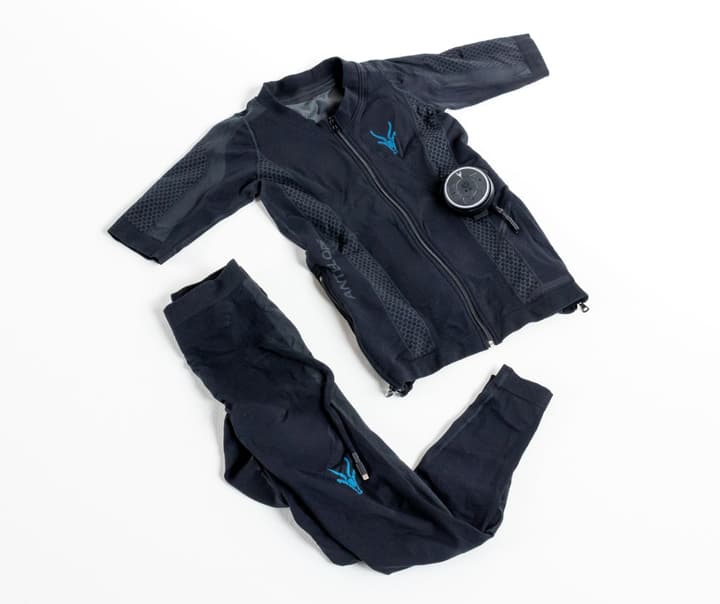
Once you've got your own EMS suit, log in to the Freeletics app to get started.
You will find the new on-demand workouts under the Explore section in the Coach tab.
Then brace yourself for the burn. Suit up. Tap in. Level up.
Let’s recap
Going further doesn't have to mean spending more time. It can mean upping the intensity – taking the foundational movements you already know and layering on the challenge. That's what the Freeletics x Antelope partnership is all about.
It's not replacing your training. It's adding to it. It's the answer for those days you're asking yourself if you've got more to give. And trust us, these workouts deliver.
Try Freeletics nowFAQ
What is EMS training?
EMS training, short for electrical muscle stimulation, uses controlled electrical impulses alongside your body’s natural nerve signals to activate more muscle fibers during movement. No fad, it’s been around and used by athletes for decades.
Do I need special equipment for these workouts?
Yes, you'll need an Antelope EMS suit, since that's what delivers the impulse while you move through each exercise.
Is EMS training safe?
For most healthy adults, yes, but it isn't for everyone. EMS isn't recommended if you have a pacemaker or other implanted device, are pregnant, have epilepsy, or have certain heart conditions, so check with a doctor first if any of that applies to you.
How is an EMS workout different from a regular bodyweight workout?
The movements are the same, Planks, Pushups, Lunges, but the EMS training suit sprinkles in some extra intensity on top, so the same exercises feel even more challenging and are more effective in less time.
How often should I train with EMS?
It depends on your fitness goals. Most people see results with 1-2 EMS workout sessions a week, with rest days in between to recover. More isn’t always more.
Sources
- Borzuola, R., Laudani, L., Labanca, L., & Macaluso, A. (2023). Superimposing neuromuscular electrical stimulation onto voluntary contractions to improve muscle strength and mass: A systematic review. European Journal of Sport Science, 23(8), 1547–1559.
- Maffiuletti, N. A., Gondin, J., Place, N., Stevens-Lapsley, J., Vivodtzev, I., & Minetto, M. A. (2018). Clinical use of neuromuscular electrical stimulation for neuromuscular rehabilitation: What are we overlooking? Archives of Physical Medicine and Rehabilitation, 99(4), 806–812.