
Not all body fat is the same. There are several types of body fat that vary in color, location, and function. Some body fat types are essential because they store energy, protect your organs, regulate hormone levels, support immunity, and keep you warm.
The goal shouldn't be to get rid of all body fat completely. Instead, it should be to maintain a healthy balance with the right amount of body fat in the right places, so your health and performance are at their best.
Let's break down each type of body fat – what it does, how much you need, and how exercise shifts the balance.
Types of body fat at a glance
There are several types of body fat, and they're usually grouped by three things:
- Color
- Location
- Function
| Group | Types | What it means |
|---|---|---|
| Color | White/Brown | How fat cells behave and use energy |
| Location | Subcutaneous/Visceral | Where it's stored in the body |
| Function | Essential fat/Fat storage | Why the body stores it |
These groups can overlap. For example, the fat around your hips is often white, subcutaneous, and storage fat all at once. Understanding these categories helps explain why some fat supports your health, while too much in the wrong places can be harmful.
What are the different types of body fat?
Several types of body fat can be grouped by their color, location, and function in your body. Each type of fat has a different role in the body. Some support a healthy metabolism and keep your hormone levels balanced, while others contribute to chronic diseases such as type 2 diabetes and heart disease.
1. Color
There are three main types of body fat cells: white, brown, and beige. Each one is defined by its function and location.
What is white fat?
White adipose tissue, or white fat, is the body fat everyone immediately thinks of and is the body's primary energy store. It makes up the vast majority of fat in adults, storing excess calories inside large fat cells. When your body needs fuel, these cells release fatty acids for energy. When white fat cells function properly, they can reduce the risk of metabolic disease.
However, problems occur when white fat cells store too much, which ultimately results in large fatty deposits throughout the body. This causes low-grade inflammation, leading to metabolic disease, insulin resistance, and type 2 diabetes.1
What is brown fat?
Brown fat cells complement white adipose tissue. Brown fat is responsible for converting energy from glucose and fats into heat, which helps maintain body temperature. Because brown fat can break down sugar and fat, it improves your metabolism and is associated with a lower risk of obesity and other metabolic diseases.2
Brown fat contains large numbers of mitochondria, often called the powerhouses of cells, which give it its distinct color. Brown fat is abundant in babies, helping them keep warm after birth as they are unable to shiver, although adults retain small amounts, commonly around their neck, shoulders, and upper spine.
Researchers are actively studying whether increasing brown fat activity could improve metabolism, insulin sensitivity, and body weight regulation.
What is beige fat?
Beige fat is something of a hybrid. It develops within white fat tissue but can behave like brown fat under certain conditions, particularly during cold exposure or regular exercise. When activated, beige fat begins to burn energy rather than store it.3
Scientists are still learning exactly how exercise influences beige fat in humans, but early research suggests physical activity may encourage some white fat cells to become more metabolically active.
2. Location
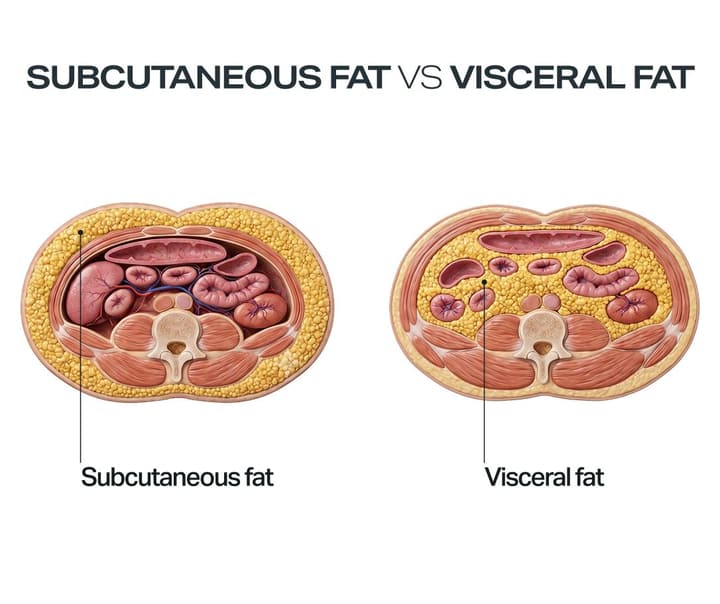
Color isn't the only distinguishing feature of body fat types; where it is in the body is also important. The location of body fat is influenced by genetics, sex, and age, and is categorized as subcutaneous or visceral fat. The location of body fat is a key determinant of disease risk rather than the total amount of fat in the body alone.
What is subcutaneous fat?
Subcutaneous fat is the type that sits just below the skin.4 It's the type you can pinch on your stomach, thighs, hips, and arms. For most people, subcutaneous fat accounts for 90% of their total body fat.5
Although many people focus on reducing subcutaneous fat for their appearance, it is generally considered safer than visceral fat and provides cushioning, insulation, and energy storage. However, having too much subcutaneous fat can contribute to obesity, but on its own, it's usually less harmful than having excess visceral fat.
What is visceral fat?
Visceral fat is stored much deeper within the abdomen and surrounds organs such as the liver, pancreas, and intestines. Visceral fat is more metabolically active than subcutaneous fat, releasing inflammatory chemicals and hormones6 that interfere with how the body regulates blood sugar, cholesterol, and blood pressure.
Abdominal (visceral) obesity means too much fat has built up around the organs, and is linked to:
- Impaired fat and sugar metabolism
- Insulin resistance
- Increased risk of certain cancers, including breast, prostate, and colon
- Infections7
- Heart disease, high blood pressure, and heart attacks
Visceral fat usually builds up due to a combination of lifestyle and biological factors, including poor diet, lack of exercise, stress, and genetics.
3. Function
Body fat can also be grouped by the job it does: the fat you can't live without, and the fat your body keeps in reserve.
What is essential fat?
Essential fat is the minimum your body needs to function. It supports your hormones, protects your organs and nerves, and helps you absorb vitamins. Women carry more essential fat than men, roughly 10-13% of body weight in women versus 2-5% in men, partly because some of it supports reproductive function.
What is storage fat?
Storage fat is the energy your body banks when you take in more calories than you burn. Most of it is subcutaneous fat under the skin, with a small share stored as visceral fat around the organs. A healthy amount cushions and fuels you. The problems start when excess fat, especially visceral fat, builds up.
What is a healthy body fat percentage?
A healthy body fat percentage is roughly 14-24% for men and 21-31% for women, with athletes having lower percentages. Body fat percentages estimate how much of your total body weight is fat. Here's how the American Council on Exercise breaks it down:
| Men | Women | |
|---|---|---|
| Essential fat | 2-5% | 10-13% |
| Athletes | 6-13% | 14-20% |
| Fitness | 14-17% | 21-24% |
| Acceptable/average | 18-24% | 25-31% |
| Obese | ≥25% | ≥32% |
How is body fat measured?
Body fat can be measured in several ways; each has pros and cons, but they can give you a better idea of how much body fat you have.
| Measurement type | Pros | Cons |
|---|---|---|
| Weighing scales | Simple way to find out if you're carrying excess weight. | Can't tell you how much of your weight is fat, bone, or muscle, or where fat is located. |
| Skinfold calipers | Affordable and can track body fat over time. | Not always reliable, can be difficult to use, and some sets are more accurate than others. |
| Smart scales | Quick, convenient, and often available in the gym. | Results can be affected by hydration, can be expensive to buy, and are not suitable if you have a pacemaker fitted. |
| US Navy Method | Accurate to within 3 to 4%, and a cost-effective way to track changes over time. | Less accurate than DEXA scans. |
| DEXA Scan | Tells you how much fat you have and its location, and it is accurate. | Expensive and requires specialist equipment. |
| MRI Scan | Gold standard for tracking body composition | Not always practical and expensive |
For most people, consistency matters more than precision.
Using the same method under similar conditions over time provides a better picture of progress than switching between different measurement techniques.
How can you reduce excess visceral fat?
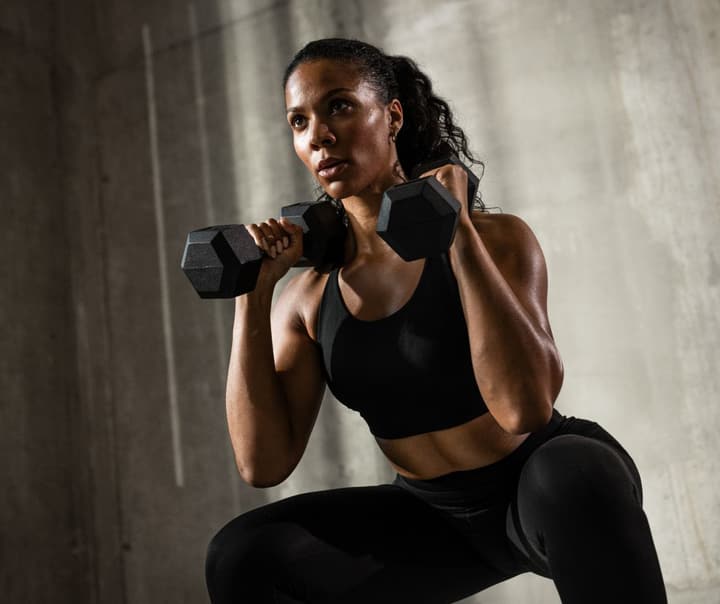
You can't target visceral fat directly, but you can reliably reduce it by combining resistance training, regular cardio, a balanced diet, stress management, and good sleep. Many of the ways to lose visceral fat are the same as the methods you use to lose weight and reduce total body fat. They include:
- Resistance training: Strength training preserves and builds muscle while lowering body fat. In one trial, participants doing higher-resistance training lost nearly a fifth of their visceral fat over the course of the program.8 Aim for 2 resistance training sessions per week.
- Regular cardio training: Walking, running, cycling, swimming, and HIIT all help reduce visceral fat, even without significant weight loss.9
- Follow a healthy, balanced diet: It's important to avoid overly restrictive diets and those that are high in processed, fatty, or high-sugar foods. Instead, focus on building meals that contain lean protein, vegetables, fruit, wholegrains, fiber, and healthy fats.
- Manage stress: Chronic stress and high cortisol levels have been linked to greater visceral fat.10 Movement, mindfulness, and spending time outdoors can all help manage stress and reduce abdominal fat.
- Prioritize sleep: Poor sleep is linked with increased visceral fat and disrupted hunger hormones.11 Ideally, aim to get 7 to 9 hours of sleep per night. Making small changes to your routine and environment can help.
Debunking the body fat myths
Myth #1: You can spot-reduce belly fat
False. Exercises like crunches strengthen your abdominal muscles, but don't specifically burn fat from your stomach. Instead, a combination of regular cardio and resistance training, along with a healthy diet, is the best way to reduce belly fat.
Myth #2: All body fat is unhealthy
False. Body fat is essential for survival. We need it for energy, warmth, and protection. Body fat becomes a problem when we have too much of it, especially visceral fat.
Myth #3: Thin people can't have visceral fat
False. Someone with a healthy BMI can still have high levels of visceral fat if they are sedentary or have low muscle mass.
Let's recap
Understanding the different types of body fat and their functions is key if you want to improve your body composition and overall health. Body fat isn't something to fear, and some body fat is actually essential for your body to function.
White fat keeps you alive. Brown fat helps regulate body temperature. Subcutaneous fat stores energy safely. It's excess visceral fat that deserves the most attention – that's the type that quietly affects your long-term health.
If your goal is to lose weight, rather than fixating solely on the scale, focus on building sustainable, healthy habits over quick fixes.
With regular exercise, balanced nutrition, and good recovery, you can improve both your health and your performance, one workout at a time.
Try Freeletics now- Owens, B. Cell physiology: The changing colour of fat. Nature 508, S52–S53 (2014). https://doi.org/10.1038/508S52a
- Wein, H. (2019). How brown fat improves metabolism. National Institutes of Health. Available at: https://www.nih.gov/news-events/nih-research-matters/how-brown-fat-improves-metabolism
- Kiefer F. W. (2017). The significance of beige and brown fat in humans. Endocrine connections, 6(5), R70–R79. https://doi.org/10.1530/EC-17-0037
- Mittal B. (2019). Subcutaneous adipose tissue & visceral adipose tissue. The Indian journal of medical research, 149(5), 571–573. https://doi.org/10.4103/ijmr.IJMR_1910_18
- LeWine, H, E. (2024). Taking aim at belly fat. Harvard Health. Available at: https://www.health.harvard.edu/newsletter_article/taking-aim-at-belly-fat
- Lee, M. J., & Kim, J. (2024). The pathophysiology of visceral adipose tissues in cardiometabolic diseases. Biochemical pharmacology, 222, 116116. https://doi.org/10.1016/j.bcp.2024.116116
- Shuster, A., Patlas, M., Pinthus, J. H., & Mourtzakis, M. (2012). The clinical importance of visceral adiposity: a critical review of methods for visceral adipose tissue analysis. The British journal of radiology, 85(1009), 1–10. https://doi.org/10.1259/bjr/38447238
- Dutheil, F., Lac, G., Lesourd, B., Chapier, R., Walther, G., Vinet, A., Sapin, V., Verney, J., Ouchchane, L., Duclos, M., Obert, P., & Courteix, D. (2013). Different modalities of exercise to reduce visceral fat mass and cardiovascular risk in metabolic syndrome: the RESOLVE randomized trial. International journal of cardiology, 168(4), 3634–3642. https://doi.org/10.1016/j.ijcard.2013.05.012
- Ohkawara, K., Tanaka, S., Miyachi, M., Ishikawa-Takata, K., & Tabata, I. (2007). A dose-response relation between aerobic exercise and visceral fat reduction: systematic review of clinical trials. International journal of obesity (2005), 31(12), 1786–1797. https://doi.org/10.1038/sj.ijo.0803683
- Donoho, C. J., Weigensberg, M. J., Emken, B. A., Hsu, J. W., & Spruijt-Metz, D. (2011). Stress and abdominal fat: preliminary evidence of moderation by the cortisol awakening response in Hispanic peripubertal girls. Obesity (Silver Spring, Md.), 19(5), 946–952. https://doi.org/10.1038/oby.2010.287
- Papatriantafyllou, E., Efthymiou, D., Zoumbaneas, E., Popescu, C. A., & Vassilopoulou, E. (2022). Sleep Deprivation: Effects on Weight Loss and Weight Loss Maintenance. Nutrients, 14(8), 1549. https://doi.org/10.3390/nu14081549
