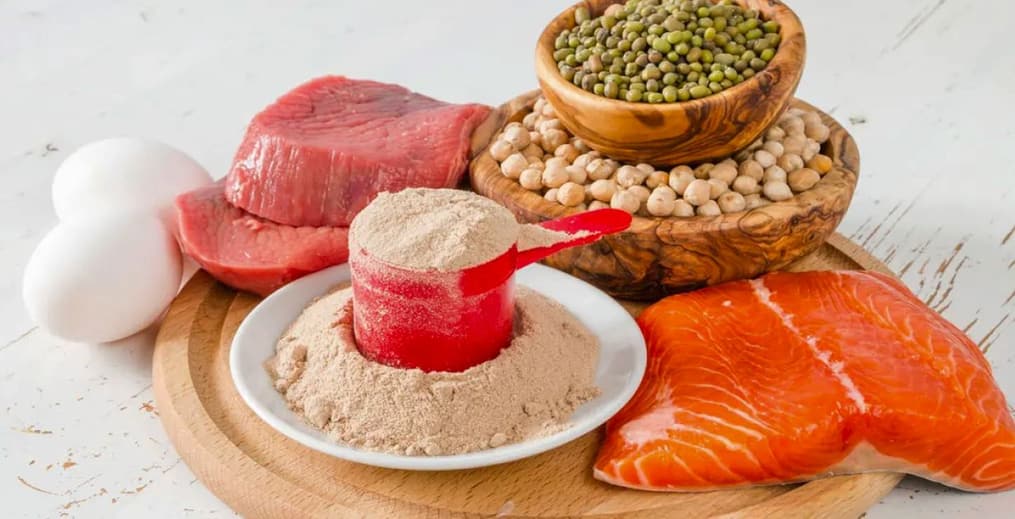
Protein plays a key role in so many aspects of your health and fitness, supporting everything from building and maintaining muscle to driving chemical reactions and even curbing hunger. It is one of the three macronutrients, alongside carbohydrates and fats, that your body needs in large amounts to provide energy.
But how much protein do you really need? Should your intake change if you're strength training versus endurance training? And, do you need supplements like protein powder?
Here we explain what protein is, why it matters, and how you can use it effectively to reach your goals.
The Science: What is protein and why does it matter?
Protein is an essential part of a well-balanced diet. It is made up of smaller building blocks, called amino acids, that link together to form chains and can fold into specific shapes. And it’s these shapes that determine their overall function.
When you eat protein, your body breaks it down into these amino acids, which it then uses to repair, build, and regulate itself.
In total, there are 20 amino acids. Nine are essential, which means your body cannot make them, so you must get them from the food you eat. The remaining 11 are non-essential, and your body can make them as needed.
What does protein do in your body?
Protein is needed for more than just building muscle. It’s also a key structural component for many parts of your body, including:
- Muscles
- Tendons and ligaments
- Skin, hair, and nails
Protein is also needed for producing enzymes that drive chemical reactions, hormones that regulate your metabolism, and antibodies that support your immune system. For athletes, its most well-known role is in muscle repair and growth.
When you work out, especially during high-intensity interval training (HIIT) or strength sessions, microscopic muscle damage occurs. This is a normal part of training that allows muscles to adapt and grow.
When you eat protein, your body gets the raw materials it needs to rebuild muscle fibers, making them stronger than before.

Why does protein matter for different fitness goals?
How much protein you need depends on what your fitness goal is. If you want to build muscle, you’ll need a higher intake, but the timing when you consume your protein also matters.
For example, if you want to aid the recovery process post-workout, eating 15 to 25g of protein 30 to 60 minutes after a workout is an optimal strategy for maximizing muscle protein synthesis, repairing muscles, and reducing soreness.1
How does protein support muscle growth?
Muscle growth occurs when protein synthesis is greater than muscle protein breakdown. Activities like resistance training can stimulate this process, but so can eating protein.
Research shows that higher protein intakes of 1.6g/kg/day, alongside resistance training, significantly increase lean body mass and strength compared to lower intakes.
In other words, if you’re looking to build muscle, protein is non-negotiable.
How does protein improve recovery?
When it comes to recovery, protein provides essential amino acids that repair muscle tissue damaged during exercise, promoting muscle growth and reducing soreness.
Extra protein during recovery can speed up muscle repair and glycogen replacement, meaning you’ll recover faster, so you’ll be prepared for your next workout.
Does protein support fat loss?
Yes, protein is a key nutrient for supporting fat loss. It helps preserve lean muscle mass, increases your metabolism, and curbs hunger by lowering ghrelin levels (the hunger hormone) and increasing appetite-suppressing hormones.
Protein also has a higher thermic effect than carbs or fat, meaning your body burns more energy to digest it, which can further support your weight-loss efforts by using more daily calories than you consume.
How much protein do you need?
The amount of protein you need depends on your individual circumstances – for example, your fitness goal, weight, height, gender, level of physical activity, etc. If you’re new to performance nutrition, 0.8 grams of protein per kg of body weight is a good starting point to aim for at the beginning.
To give you an idea of how much protein this is, here’s roughly how much you will find in the following common foods:
- Tuna (100 grams canned in water): 25.5 grams
- Chicken (100 grams breast, cooked): 30 grams
- Tofu (100 grams): 8 grams
- Lentils (100 grams cooked, without added fat): 9 grams
- 1 egg: 6 grams
- 1 egg white: 3 grams
Does this mean you have to use a calculator every time you prepare a meal? No, not necessarily. If you’re active, 1 or 2 protein shakes a day, along with meat or fish for lunch and dinner, and a breakfast that includes foods like yogurt or eggs, is usually enough to hit your daily protein intake goals.
What are the best sources of protein?
Protein-rich foods can be sourced from both animal and plant foods. Some high-quality, good sources of protein include:
- Lean meats
- Fish and seafood
- Eggs
- Greek yogurt and cottage cheese
- Tofu and tempeh
- Lentils and beans
- Soy products
- Quinoa
There are key differences between animal and plant sources of protein to consider, though. Animal proteins are considered “complete” because they contain all the essential amino acids in optimal amounts.
For those following a plant-based diet, it’s important to eat a variety of protein sources throughout the day to make sure your body gets all the essential amino acids it needs.
Again, for active individuals, adding a plant-based protein shake can be a simple way to help meet your protein goals.
Debunking common myths about protein
Myth | Reality |
| More protein = more muscle | Muscle grows from progressive resistance training. Protein supports it – it doesn’t replace it. |
| High protein harms your kidneys | In healthy people, higher protein intakes are safe. |
| Plant protein isn’t good enough | Total intake and variety matter more than source. |
| Protein only matters on exercise days | Muscle repair happens every day. So should your protein intake. |
| You only absorb 30 g per meal | Your body absorbs almost all protein. |
Protein for athletes: 3 things to consider
Protein isn’t just about hitting a daily target; it’s about strategy. Here are three things to keep in mind:
- Timing: Hitting your total daily intake is important, but you also need to think about when you’re eating protein. Aim to distribute it evenly across your meals. Eat a high-protein snack, meal, or shake after training to support muscle recovery and repair.
- Long-term health: As you get older, age-related muscle loss, reduced strength, and reduced mobility can occur. Prioritizing protein can help prevent these issues in older adults. It can also support your immune system and bone health, and help manage your weight.
- Supplements: If you follow a vegan, vegetarian, or plant-based diet, it’s possible to meet your daily protein needs, but you will need to take extra care. Plant proteins contain lower amounts of some essential amino acids, so you may choose to try some protein supplements. Before you do, consider a variety of legumes, grains, nuts, and seeds, choose high-protein foods, like tofu, tempeh, and lentils, and look out for cereals, breads, and snacks with added protein.
How to naturally boost your daily protein intake
Increasing your protein intake doesn’t have to be complicated and requires very little effort. You may even be doing many of these things without realizing.
Making small changes to your daily diet with some high-quality protein sources can make a big difference. Here are some ideas:
- Add eggs or Greek yogurt to your breakfast
- Include a protein source at every meal
- Swap low-protein snacks for cottage cheese, Skyr, or roasted chickpeas
- Add lentils or tofu to salads
- Use a post-workout protein shake when needed
Let’s recap
Protein is a powerhouse macronutrient – vital for performance, recovery, and overall health. If you work out consistently, you may need more protein than the recommended daily protein intake.
But don’t overcomplicate it. Spread your protein intake throughout the day, prioritize whole foods with high-quality protein, and use supplements when needed. Do this, and you’ll be fueling your body to feel and perform at its best!
Try Freeletics nowYou might also be interested in:


Sources
[1] Jäger, R., Kerksick, C. M., Campbell, B. I., Cribb, P. J., Wells, S. D., Skwiat, T. M., Purpura, M., Ziegenfuss, T. N., Ferrando, A. A., Arent, S. M., Smith-Ryan, A. E., Stout, J. R., Arciero, P. J., Ormsbee, M. J., Taylor, L. W., Wilborn, C. D., Kalman, D. S., Kreider, R. B., Willoughby, D. S., Hoffman, J. R., … Antonio, J. (2017). International Society of Sports Nutrition Position Stand: protein and exercise. Journal of the International Society of Sports Nutrition, 14, 20.
