
The back muscles are a complex system made up of many muscles, ligaments, and tendons that are responsible for a variety of movements and functions, playing a pivotal role in daily life.
Their primary roles are to stabilize and move your spine, as well as the shoulder blades, according to how you’re trying to move. Key back muscles include the following:
- Trapezius
- Rhomboids
- Latissimus dorsi
- Erector spinae (spinal erectors)
And although this muscle group plays such an important role in everyday activities and quite literally carries you through life, the back muscles are often overlooked when it comes to training.
A weak back can lead to a multitude of health issues, which is why training these muscles regularly is so essential. In this article, we’ll break down the anatomy of the back muscles, their function, and which exercises are the most effective for strengthening them.
Trust us, regularly incorporating exercises that target your back muscles will make a world of difference not only in your performance but also in your posture, stability, and life.
Let’s dive right in with the types of back muscles.
What are the main muscles of the back?
Your back isn’t one muscle; it’s a layered system.
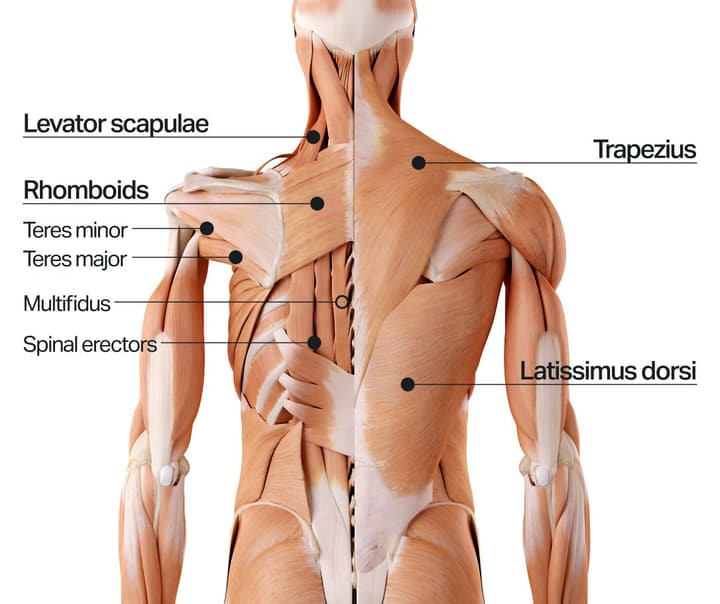
The trapezius muscle blankets your neck, shoulders, and mid-back. The rhomboids sit between your shoulder blades and are crucial for good posture. The latissimus dorsi (“lats”) sweep across your sides to power every pull, and the spinal erectors run the length of your spine to keep you stable and upright.1
Those are the main movers, but they work alongside several deeper muscles that stabilize it all.3 Generally, the superficial muscles are the extrinsic muscles that move your shoulders and arms, while the deep back muscles are the intrinsic back muscles that move and stabilize your spine. Here’s the full lineup at a glance:
Superficial back muscles
Muscle | Location | Primary Function |
| Trapezius | Runs from the back of the neck to the shoulders and down to the middle of the back. | Controls movements of the shoulder blades and neck, including shrugging, pulling shoulder blades together, and tilting or rotating the head and neck. |
| Rhomboids | Runs between the shoulder blades and the thoracic spine. | Contracts and rotates shoulder blades; helps maintain an upright posture. |
| Latissimus dorsi ("Lats") | Broad muscle extending up and across from the sides of the lower and mid-back to the top of the arm. | Primarily responsible for pulling arms down and in. |
| Levator Scapulae | Back of neck and extends to the top of the shoulder blade. | Raises the shoulder blade and assists in neck rotation. |
Deep back & supporting shoulder muscles
Muscle | Location | Primary Function |
| Erector Spinae | Runs vertically down the entire length of the back on either side of the spine. | Provides stability and movement. |
| Multifidus | Deep in spine; connecting vertebrae. | Stabilizes the spine; extension, rotation, and side bending of the torso. |
| Teres Major | Bottom edge of shoulder blade; running to upper arm. | Supports lats in rotation, adduction, and extension. |
| Teres Minor | Above Teres Major, beneath deltoid. | Externally rotating the arm and stabilizing the rotator cuff.2 |
How do the back muscles function?
Your back muscles have two main functions: Stabilizing and moving your spine (and shoulder blades). Their exact function depends on several factors, such as your body position and the main joint that generates force.
As a rule of thumb, most of your back muscles act as stabilizers – meaning these muscles support your spine and resist motion when force is applied. For example, when you complete a Squat, your hips and legs move, while your back and upper body remain stable.
On the other hand, during a Back Extension, your spinal erectors extend your spine upwards, moving your back as you complete the exercise.
Movement or not, both functions are vital in everyday life and should be trained regularly.
Why should you train your back muscles?
There are three main reasons for training the back: Health, performance, and aesthetics.
While back muscles may not get as much hype, a weak back can cause a number of problems in everyday life. If you’ve ever experienced tight shoulders, stiff neck, or even worse – back pain, then you know all too well how debilitating it can be. The best form of medicine here is preventive, prioritizing back-strengthening exercises to ward off imbalances and muscle strain that can lead to pain.5
A strong back is crucial to athletic performance. It aids in coordination, balance, and power via the two functions mentioned above: stability and movement. Your back muscles also play a key role in injury prevention, which is all the more reason to add a “back day” to your training regimen.
Lastly, a muscular back can help improve your overall aesthetic. Or, namely, help you look (and feel!) good. Increasing your upper-body muscle mass will help make your waist appear smaller, and as a bonus, more muscle means more calories burned. Plus, a well-developed back is something to marvel at since it takes a ton of hard work to build.The good news is that all three goals can be achieved using similar methods!
The best exercises for each back muscle
For a long time, the back was considered fragile, and any kind of movement or training was cautioned against. New evidence refutes this myth; training your back is just like training any other muscle group.
To build a stronger, more resilient back, it’s important to incorporate exercises that target the major back muscle groups using a mix of neutral zone exercises (where the S-curve of the spine is aligned and your posture is straight), stabilization, and dynamic movements like mobility exercises.
Below are some exercises we would recommend to add to your regular workout routine:
| Back Muscle | Exercises to strengthen or stabilize | |
| Trapezius | Shoulder Shrugs, Upright Rows, Face Pulls, Farmer’s Carry | Neck Rolls, Shoulder Warmup, Cat-Cow |
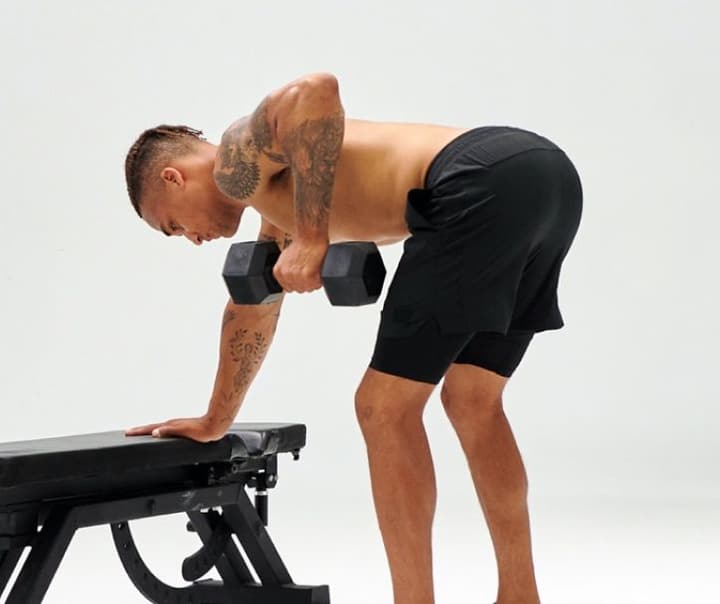
| Latissimus dorsi (lats) | Pullups, Lat Pulldowns, Bent Over Row | Lat Stretch, Lat Roll, Standing Side Stretch, Child’s Pose |
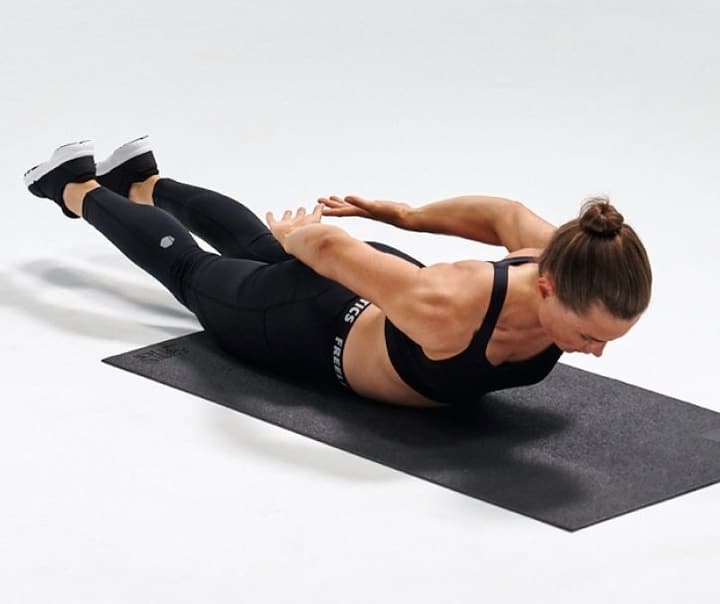
| Rhomboids | Bent Over Rows, Reverse Flies, Banded Reverse Flies, Seated Rows, Supermen | Thread the Needles, Back Roll, Shoulder Stretch, T-Spine Rotations |
| Erector Spinae | Deadlifts, Back Extensions, Good Mornings, Supermen, Arm & Leg Lifts | Cat-Cow, Standing Forward Fold, Side Stretch |
Note: The deeper stabilizer muscles of multifidus, teres, and levator scapulae don’t need isolation work. They’re trained automatically through the compound lifts and stabilization exercises above.
If you're new to strength training, start with some neutral zone back exercises to help develop spinal alignment and body awareness. Exercises like Shoulder Bridge Leg Raises, Dead Bugs, or Supermen are great for getting a feel for keeping a neutral spine alignment and perfecting your form. Start slow, without weights, and as you progress, you can move on to more difficult variations or other back exercises that require a larger range of motion.
In parallel to building strength and mobility through neutral zone exercises, it’s just as important to focus on strengthening your back's stabilization. Try combining compound lifts, like weighted Squats and Deadlifts, with stabilization exercises, such as Planks, Bear Walks, or Dead Bugs. This combination will teach you to stabilize your back while moving your legs and arms.
Exercises that encourage more back movement, such as Cat-Cows, Back Extensions, or Twists, are also incredibly beneficial. When performing these types of exercises, you want to consciously move your spine through different ranges of motion. Move slowly and deliberately, but don’t try to force movements that aren’t quite there yet.
After a few months, you'll see (and feel!) what a difference training your back can make. Whatever back exercises you choose to do, prioritize good form over heavy lifts, and remember that patience and consistency are crucial to achieving your goals.
Lower vs. Upper: How to deal with back pain?
Your back doesn’t work in isolation. Your back muscles connect to your hips, shoulders, and core, so a problem in one area often shows up in another. For example, tight hips can limit mobility and force your lower back to compensate, leading to lower back pain.
Likewise, tight shoulders or other imbalances in your chest or neck could be the source of that nagging upper back pain.
Additionally, other muscles in your body, like your chest and core, can also negatively affect your upper or lower back muscles when not trained correctly.
So, if you’re dealing with back pain, what’s the best way to care for your back? By caring for your whole body. Almost every movement you make engages your back muscles – it’s truly the powerhouse of daily activity.
Try incorporating daily mobility exercises into your workout routine. Take time to stretch, balance out your strength exercises, and focus on improving mobility in your hips and shoulders.6 And never, ever skip a “back day”!
Let’s recap
Your back is at the center of every movement, so don’t wait until pain creeps in to start strengthening it.
Rotate in exercises that train your upper and lower back, mixed with compound lifts that challenge your stability, as well as mobility exercises that’ll support your spine’s flexibility.
Start slow, give your back muscles time to adapt, grow, and strengthen. The result will be a strong, stable back that will carry you through your training and everyday life.
Try Freeletics nowYou might also be interested in:


FAQ
What are the 3 main back muscles?
The three main back muscles are the latissimus dorsi, the trapezius, and the erector spinae.4
What's the largest back muscle?
The largest back muscle is the latissimus dorsi, or “lats” which is also the largest muscle in the upper half of your body.
How do I strengthen my back?
You can strengthen your back muscles by incorporating regular strength training, stability, and mobility exercises that target both your major back muscles, as well as your entire body.
Sources
[1] Henson B, Kadiyala B, Edens MA. Anatomy, Back, Muscles. [Updated 2023 Aug 14]. In: StatPearls [Internet]. Treasure Island (FL): StatPearls Publishing; 2025 Jan-.
[2] Vasković, J. (2023). Overview of the back muscles. Kenhub.
[3] TeachMeAnatomy. (2024). The Superficial Back Muscles – Attachments, Actions.
[4] Cleveland Clinic. (2024). Back Muscles: Anatomy and Function of Upper, Middle & Lower Back.
[5] Steffens, D., Maher, C. G., Pereira, L. S. M., et al. (2016). Prevention of low back pain: a systematic review and meta-analysis. JAMA Internal Medicine, 176(2), 199–208.
[6] Viderman, D., Kalikanov, S., Myrkhiyeva, Z., et al. (2025). Impact of Exercise Therapy on Outcomes in Patients with Low Back Pain: An Umbrella Review of Systematic Reviews. Journal of Clinical Medicine, 14(17), 5942.
