Resistance training is one of the most effective tools for long-term shoulder health. Properly loading muscles and connective tissue encourages adaptation: muscles become stronger, tendons more resilient, and joints better supported.
Healthy shoulders are essential for almost everything we do – from lifting groceries and reaching overhead to training hard in the gym.
Yet the shoulder, a complex ball-and-socket joint, is one of the most commonly injured joints in the body. This is not surprising when you consider its incredible mobility combined with modern lifestyles that often limit movement and promote poor posture.
The good news is that shoulder health can be significantly improved with the right combination of exercise, mobility work, and daily habits.
Exercise
Resistance training
When done with proper technique and balanced programming, resistance training does not “wear out” the shoulders – it protects them.
Bodyweight and functional strength exercises are especially valuable.
Upper-body movements like Pushups, Pullups, Rows, and Overhead Presses train the shoulder through its natural range of motion while challenging coordination and control.1

Strengthen muscles and train stabilizers + works on range of motion
Unlike machines that lock you into a single path, free weights and bodyweight exercises require your shoulders to stabilize dynamically. This means the smaller stabilizing muscles work alongside the larger muscles to control the joint.
Research consistently shows that joints supported by strong, well-coordinated muscles are more resilient and less prone to injury.
When exercises are performed through full ranges of motion, they also help maintain or improve mobility.
For example, controlled overhead pressing or hanging from a bar during Pullups exposes the shoulder to positions it was designed to handle, reinforcing both strength and movement capacity.
Muscles of the shoulder
To understand shoulder health, it helps to know which muscles are involved and what roles they play.
Main movers
The main movers are the muscles responsible for generating force and movement:
- Deltoids (shoulders): Lift the arm in multiple directions and play a major role in pressing and raising movements.
- Pectorals (chest): Drive pushing actions like Pushups and Dips.
- Latissimus dorsi (back): Power pulling movements and help control overhead arm positions.
These muscles tend to get plenty of stimulation, especially in workouts focused on aesthetics or pushing strength.
Stabilizers
The stabilizers are smaller but critically important:
- Rotator cuff muscles: A group of four muscles that keep the head of the upper arm bone centered in the shoulder socket during movement.
Weak or poorly trained rotator cuff muscles can lead to instability, pain, and reduced performance. While they are often trained indirectly during compound movements, they also benefit from targeted, controlled exercises.
Importance of the Warmup
A proper Warmup is not optional when it comes to shoulder health. Warming up increases blood flow, improves tissue elasticity, and prepares the nervous system for coordinated movement. Scientifically, this reduces injury risk and improves performance.
An effective shoulder warmup does not need to be long, but it should be specific.
Useful Warmup movements include:
- Arm circles: Performed slowly and with control, raise your arms straight and rotate forwards and backwards; these lubricate the shoulder joint and gently explore the range of motion.
- Scapular Pushups: These train the shoulder blades to move properly on the ribcage, which is essential for healthy shoulder mechanics.
- Scapular Pullups and Rows: Focusing on pulling the shoulder blades down and back activates key stabilizing muscles of the upper back.
Mobility and flexibility
Strength alone is not enough. Mobility and flexibility ensure the shoulder moves freely and efficiently. Limited mobility in one area can force the body to compensate and increase stress on joints and soft tissues of other areas.
Shoulder mobility exercises should focus on:
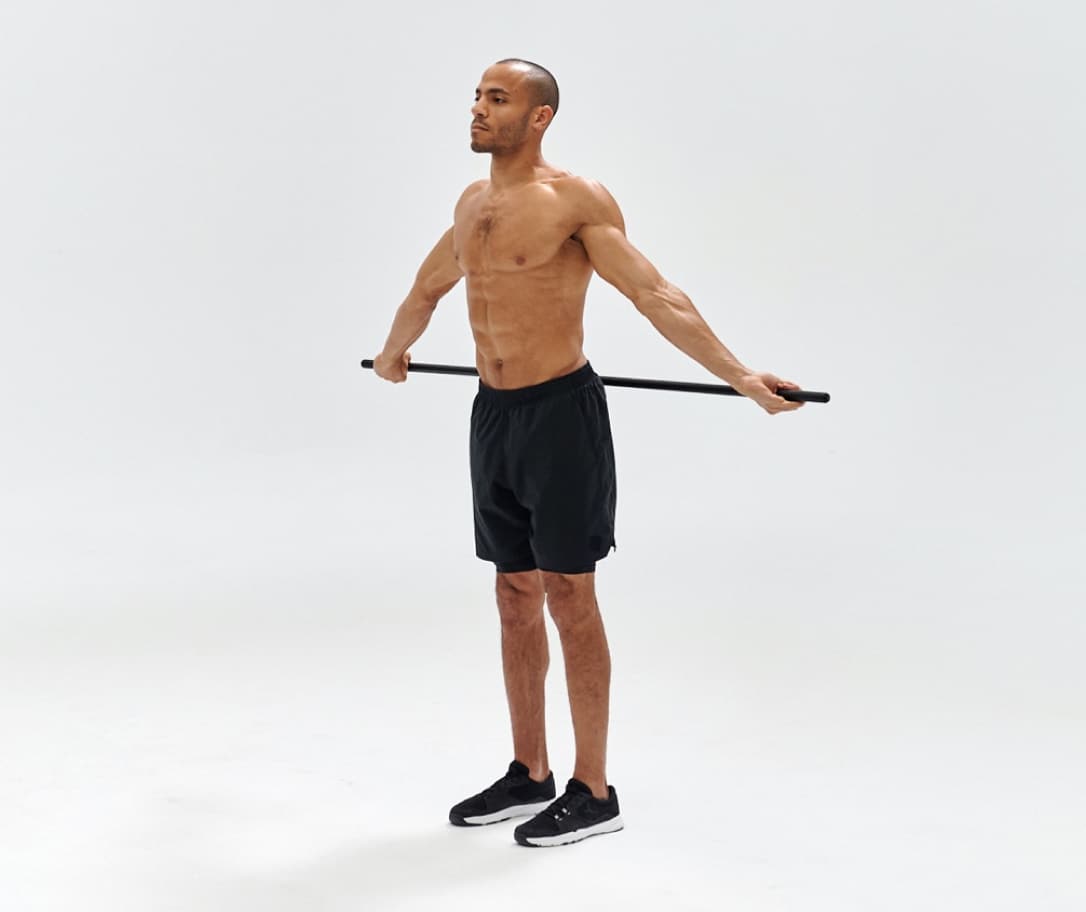
- The shoulder joint itself: movements like Shoulder Pass-Throughs help improve overall joint mobility and control
- The upper back (thoracic spine): exercises such as Child’s Pose, Cat-Cow, Thread the Needles, and Camel Hold promote thoracic extension and rotation, which support healthy shoulder mechanics
- Surrounding muscles like the chest and lats: incorporating stretching and some Self-Myofascial Release (SMR) on the chest muscles (pectoralis major and minor) and the latissimus dorsi helps reduce the feeling of muscle tightness and improve tissue quality. Using tools like foam rollers or massage balls can be very effective.
Short, consistent mobility sessions are far more effective than occasional long sessions. Even 5–10 minutes after training or before bed can make a noticeable difference and improve your flexibility over time. But start slow; you shouldn’t feel pain.
Lifestyle
Modern movement problems
Shoulder issues are becoming more common because regular movement is disappearing from daily life. Many people spend hours sitting, typing, and looking at screens, with arms rarely moving through pushing, pulling, or overhead patterns.
Historically, humans regularly climbed, carried, threw, and lifted objects overhead. Today, those movements are often limited to short gym sessions – if they happen at all.
Break up sedentary time
Long periods of sitting without moving your arms can lead to stiff joints, shortened muscles, and poor posture. Breaking up sedentary time is one of the simplest yet most effective ways to protect shoulder health.
Here are a few simple habits you can squeeze into your day, whether you’re between meetings or on the go:
- Stand up every 30–60 minutes
- Perform a few arm circles or shoulder rolls with your palms facing in
- Hang with your arms straight from a bar for 20–30 seconds, if available
These small movement “snacks” help maintain circulation and joint health.
5-minute stretch routine for work and travel
When working or traveling, regularly performing a short stretch routine can offset hours of immobility. A simple 5-minute sequence might include:
- Chest-opening stretches
- Overhead reaches with deep breathing
- Gentle neck rolls and upper back mobility
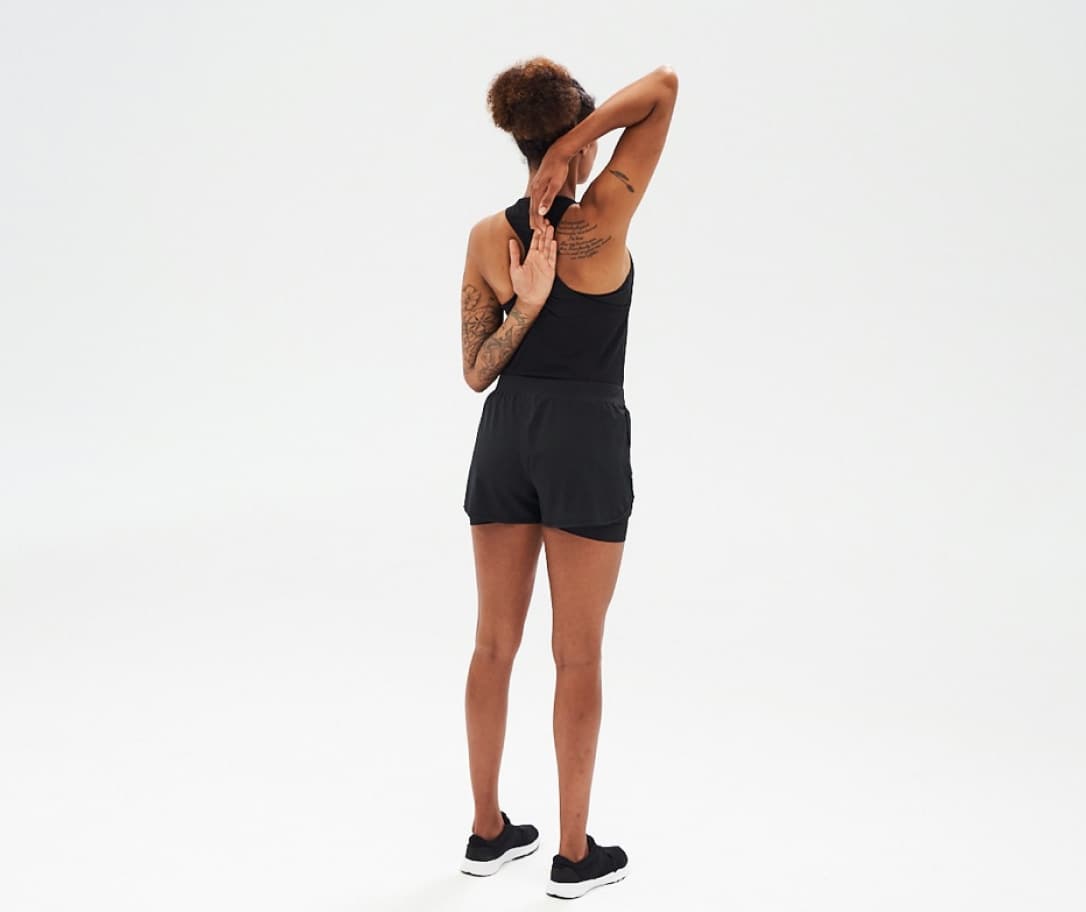
- Cross-body shoulder stretches
- Arm circles performed with a focus on both external rotations and internal rotations
Done consistently, this routine can significantly reduce stiffness and discomfort.

What to watch for
Muscle imbalances
One of the biggest threats to shoulder health is muscle imbalance. A common example is upper crossed syndrome, characterized by rounded shoulders, tight chest muscles, and weak upper back muscles. This posture changes how the shoulder joint is loaded and increases injury risk.
Push/pull balance
Many people prioritize pushing exercises they can see in the mirror, like Pushups and Bench Presses, while neglecting pulling exercises. From a scientific and biomechanical standpoint, this is a recipe for shoulder problems.
A good rule of thumb is to match or slightly exceed pushing volume with pulling volume. Exercises like Rows, Pullups, and Scapular Pulls are essential for long-term balance.
Tight or shortened muscles
Muscles that remain in shortened positions for long periods – such as the chest and front delts – can limit shoulder movement and alter joint mechanics. Regular stretching and mobility work help restore normal length and function.
Weak muscles
Weakness, especially in the rotator cuff and upper back, reduces joint stability. This can lead to compensation during training and daily activities. Controlled strength exercises and proper progression are key.2
Bad or poor form
Even the best exercise selection can cause problems if the technique is poor. Using too much weight, rushing repetitions, or ignoring pain signals can all compromise shoulder health. Focus on quality movement and gradual progression.
Previous injuries
Past shoulder injuries increase the risk of future issues if not properly addressed. Old injuries may leave behind weakness, stiffness, or altered movement patterns.
If you have a history of shoulder pain, a more cautious and structured approach – potentially guided by a professional or physical therapist – is essential.
Let’s recap
Shoulder health is not about avoiding movement or training less – it’s about training smarter and living more actively. Strong, healthy shoulders require a balance of resistance training, mobility work, and everyday movement.
The key here is consistency. Small, regular actions – whether it’s a proper warm-up, prioritizing your technique, or a 5-minute stretch during the workday – add up over time.
Start applying these principles today, and your shoulders will thank you tomorrow and for years to come.
You might also be interested in:
Sources
[1] Reinold, M. M., Escamilla, R. F., & Wilk, K. E. (2009).
[2] Page, P., Frank, C. C., & Lardner, R. (2010).