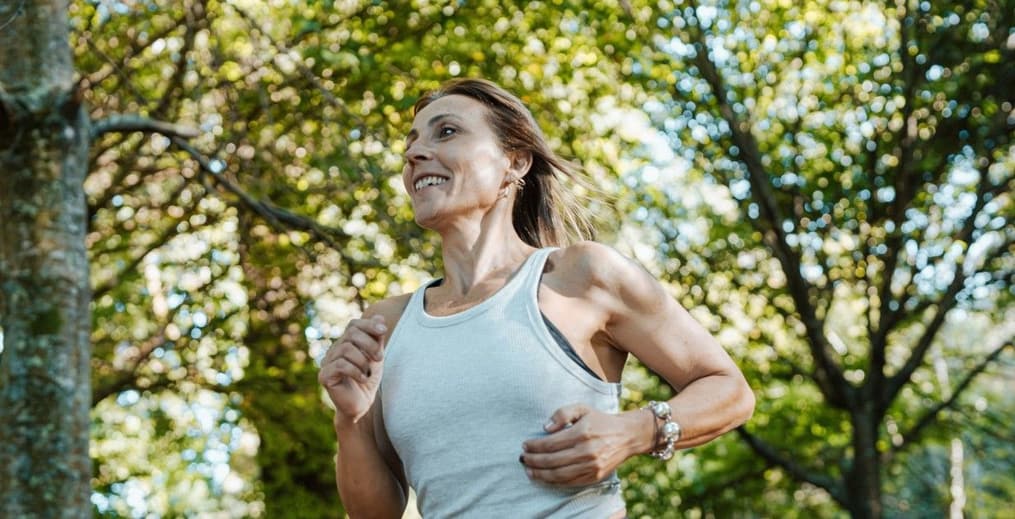
Ask most people why they care about longevity, and it isn't really about blowing out 100 candles. It's about carrying your own groceries at 80, playing on the floor with your grandkids, and getting up from a chair without thinking about it. Exercise for longevity is how you protect all of that, and it's simpler than you might think.
And what’s the best way to exercise for longevity? Variety. A combination of regular cardio to build your aerobic fitness, strength training at least twice a week, and some balance and mobility work helps keep your body healthy and capable for the years to come.
Large studies link higher fitness and muscle strength to a lower risk of early death, and people who don't get enough activity have a 20–30% higher risk of dying than people who do.1 The good news? You can build a strong foundation with just your body weight.
These are the four things to work on:
Cardio fitness: your heart and lungs.
Strength: your muscles.
Balance and mobility: staying steady and moving freely.
Daily movement: less sitting, more steps.
What is longevity?
Longevity is about how long you live. But there's a second number that matters just as much: your healthspan, or how many of those years you live in good health.
And the gap between the two is bigger than most people think. A 2024 study of 183 countries found that people around the world spend an average of 9.6 years of life in poor health. In the US, the gap is 12.4 years – the largest of any country in the study.2
So the real goal isn't only about adding years. It's closing that gap and staying healthier for more of them.
| Term | What it means | What changes it |
|---|---|---|
| Lifespan | How many years you live | Genes, environment, health care, and lifestyle |
| Healthspan | Years lived in good health: active, independent, free of serious disease | Mostly lifestyle: activity, strength, sleep, diet, and not smoking |
How does exercise help you live longer?
Exercise supports a longer, healthier life by keeping your heart, lungs, and muscles strong as you age.
Here's what's happening behind the scenes.
A stronger heart and lungs. Cardio helps your heart pump more blood with each beat and improves how efficiently your muscles use oxygen. Think of it like upgrading an engine so everyday activities feel easier.
Muscle for the long run. Think of muscles like a savings account for the future. The more you build and maintain now, the more you have to draw on when everyday tasks like taking the stairs, carrying shopping bags, or getting up off the floor start to take more effort.
Better balance, fewer falls. Training your balance keeps you steady on your feet, which matters more and more as you get older.
Benefits beyond fitness. Regular exercise also helps your sleep, your blood sugar, and your mood. More on that in our guide to exercise and mental health.
How strong is the link between exercise and longevity?
In a study of 122,007 adults who did a treadmill test, higher fitness was linked to a lower risk of death, with no upper limit seen. The least fit group had about five times the risk of death of the fittest.3 This was an observational study, so it shows a link rather than proof of cause and effect. But it's a strong one.
What is the best exercise for longevity?
There's no single best exercise for longevity. The research points to a combination of four things, and you can train every one of them with just your bodyweight, no equipment required.
| Pillar | What it protects | What the research says | Minimum weekly dose | Bodyweight exercises |
|---|---|---|---|---|
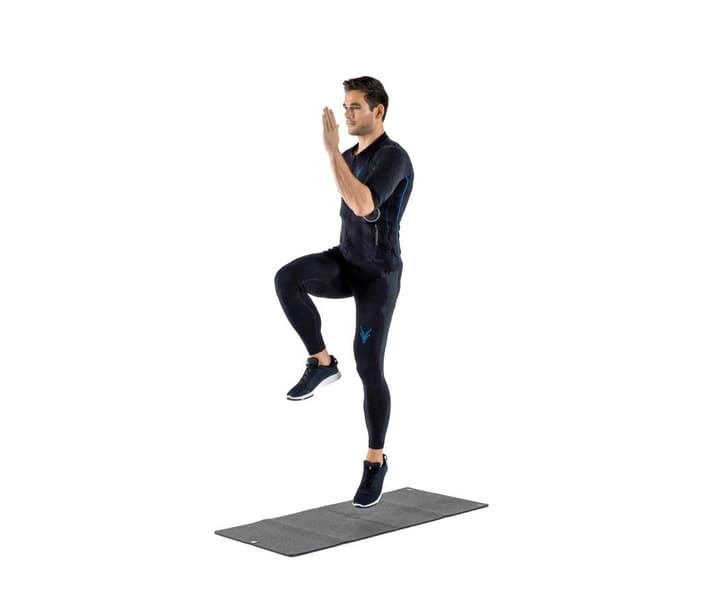
| Cardio fitness (VO2 max) | Heart, lungs, stamina | Lower risk of early death, no upper limit seen3 | 150–300 min moderate or 75–150 min vigorous4 | Run High Knees Burpees |
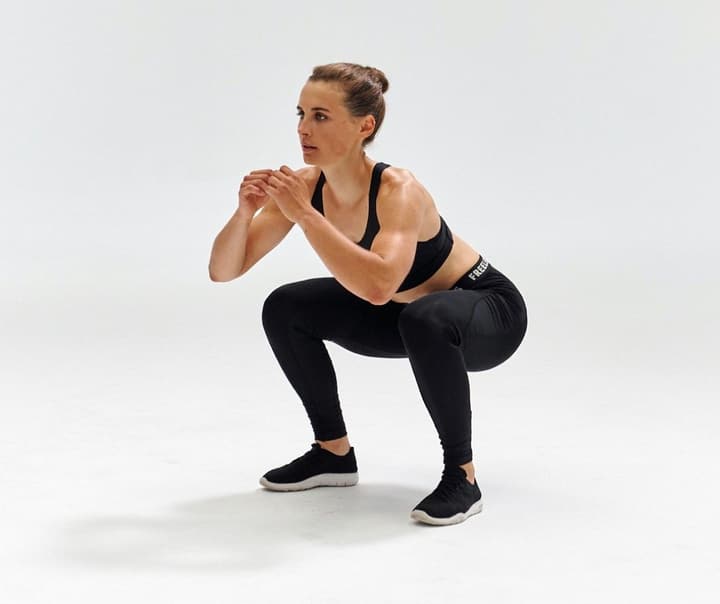
| Strength | Muscle mass, bones, everyday independence | 10–17% lower risk of early death5 | 2+ days ~30–60 min a week5 | Squats Pushups Lunges Supermen |
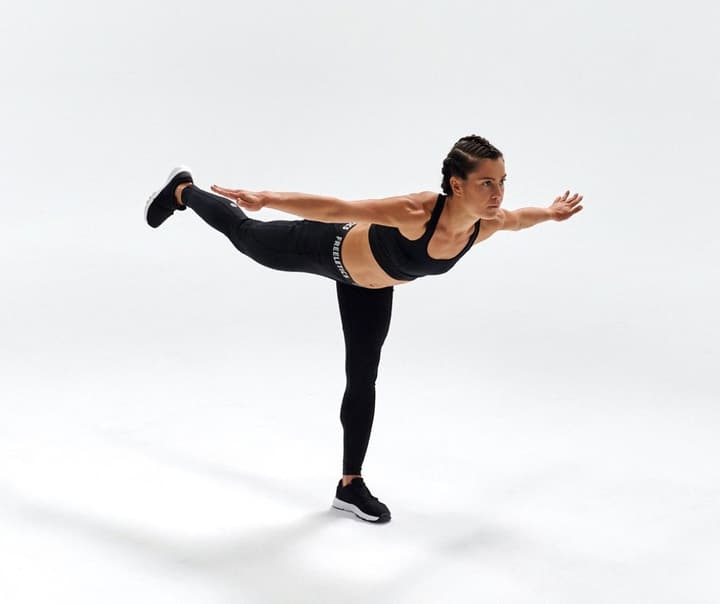
| Balance and mobility | Steadiness, range of motion, fewer falls | WHO: 3+ days a week for older adults4 | A few minutes most days | Standing Scales Deep Squat Hold World’s Greatest Stretch |
| Daily movement | Less sitting, more total activity | Benefit up to ~6,000–8,000 steps (60+) or ~8,000–10,000 (under 60)6 | Walk most days Break up long sitting | Walking Stairs Movement snacks |
Each pillar plays a different role in healthy aging. Here's why all four deserve a place in your routine:
Cardio fitness is your engine. It's the pillar with the strongest link to a longer life, and it's the one most people already know they should do.
Strength keeps you capable and independent as you age. Squats, Pushups, and Lunges work several muscles at once, so a short session goes a long way.
Balance and mobility are the quiet pillars; easy to overlook until you need them. A few minutes of single-leg work and stretching most days keeps your joints moving and your feet steady. Here's more on mobility and stability.
Daily movement is everything outside your workouts. Long stretches of sitting take a toll on your health, and short bursts of activity, or movement snacks, help break them up.
What about running, swimming, or tennis?
Good news: your favorite sport probably counts, too. Running, cycling, swimming, dancing, and racquet sports all help build your cardio fitness. Team or racquet sports add a social element that can help you stay consistent (win-win!).
Yoga and tai chi are good for balance and mobility. Just remember, most sports don't provide enough strength work, so aim to add two short dedicated strength sessions a week on top.
VO2 max and longevity: why does cardio fitness matter?
VO2 max is how much oxygen your body can use during hard exercise. It's the best single measure of your aerobic fitness, and, as the study of 122,007 adults showed, the fitter you are, the lower your risk of early death tends to be.3
So, how can you improve your VO2 max? By combining two types of cardio:
Easy, steady sessions: a brisk walk, an easy run, or a bike ride where you can still talk in full sentences. This is often called Zone 2 training, and it builds your aerobic base.
Short, hard intervals: bursts of Burpees, High Knees, or Mountain Climbers with full recovery in between. Learn more about what HIIT is and how it works.
And you don’t need a fancy lab test or a smartwatch to get fitter. If your usual walk feels easier, or you recover faster between intervals, those are signs your fitness is improving and that you're on the right track.
Strength training and longevity: does muscle help you live longer?
Yes, research suggests it does. A 2022 meta-analysis of 16 studies found that muscle-strengthening activity was linked to a 10–17% lower risk of early death, heart disease, and cancer. The greatest benefits were seen at around 30–60 minutes a week.5 That's just two or three short sessions.
Strength can also tell us a lot about your overall health. In a study of almost 140,000 adults in 17 countries, every 5 kg (about 11 lb) drop in grip strength was linked to a 16% higher risk of death from any cause.7 Want to know why? Here's why grip strength matters.
Muscle naturally declines as we age (a process called sarcopenia), which is why strength training becomes all the more important as the years go by.8 And the best results seem to come from combining both strength and cardio. In a study of almost 100,000 older adults, those who met the cardio guidelines had a 32% lower risk of death than people who did neither. Those who also lifted weights once or twice a week had a 41% lower risk.9
And here's the part we love: you don't need a gym to get the dose. Squats, Pushups, Lunges, Hip Raises, and Supermen work your entire body, and you can easily make them harder as you get stronger. More on the health benefits of strength training.
How much exercise do you need to live longer?
The WHO recommends 150–300 minutes of moderate activity or 75–150 minutes of vigorous activity a week, plus strength training on two or more days. Older adults should also add balance and strength work on three or more days a week.4
Prefer counting steps? A large analysis found that the risk of early death decreased with more daily steps, with benefits leveling off around 6,000–8,000 steps a day for people over 60, and 8,000–10,000 steps for younger adults.6
If this all sounds like a lot, just remember that some activity is better than none, so every bit you add counts.4 Here's what a simple, doable week of longevity training could look like:
| Day | Session | Example |
|---|---|---|
| Mon | Strength (20–30 min) | Squats Pushups (or Knee Pushups) Reverse Lunges Plank Hold |
| Tue | Easy cardio (30–40 min) | Brisk walk or easy Run (you can still talk) |
| Wed | Mobility and balance (10–15 min) | World’s Greatest Stretch Deep Squat Hold Standing Scales |
| Thu | Strength (20–30 min) | Lunges Hip Raises Pikes Superman Hold |
| Fri | Intervals (15–20 min) | Burpees High Knees Mountain Climbers (short, hard efforts, full recovery) |
| Sat | Long walk or active day (45+ min) | Hike, bike ride, or sport with friends |
| Sun | Rest | An easy walk if you feel like it |
If you’re not sure how hard "easy" should feel, use the talk test: you should still be able to chat in full sentences. And if you'd rather not plan it all yourself, the Freeletics Coach adapts each session to your level, so you can build across all four pillars in short workouts.
Is it ever too late to start?
No. Research shows that better fitness is linked to a lower death risk, even in people aged 70 and older.3 Your body can adapt to exercise at every age.
Start where you are and progress at your own level and pace. Knee Pushups come before Pushups, and Squats come before Pistol Squats. There's no shame in being a beginner; everyone has to start from somewhere. Here's more on how age affects performance.
If you have a heart condition or another health concern, check in with your doctor before starting a new exercise routine.
Want to see where you stand in terms of your longevity? Try this quick longevity fitness check:
Sit-and-rise test: sit down on the floor, then stand up without using your hands or knees for support. In one study of adults aged 51 to 80, people who struggled most with this test had a much higher risk of death over the following years.10
One-leg balance: see if you can stand on one leg for 10 seconds without holding on for support. In a study of adults aged 51 to 75, those who couldn’t had an 84% higher risk of death over the next seven years.11
Pushups: count how many Pushups (or Knee Pushups) you can do in a row with good form.
Treat your results as a baseline to improve on, not a verdict. Retest every few months and see how far you’ve come.
What else supports longevity besides exercise?
Exercise is a big piece of the puzzle, but not the only one. A few habits work alongside it:
Sleep: it's when your body recovers and repairs. Here's why sleep is so important.
Protein and a mostly whole-food diet: enough protein helps you build and maintain muscle, and whole foods bring the fiber, vitamins, and minerals your body needs.
Not smoking: one of the single biggest things you can do for your health.
Managing stress: exercise helps here too, and so does time to switch off.
Staying social: training with friends or joining a sport keeps you moving and connected. A true win for your fitness and your mental health.
Let's recap
Longevity is how long you live; healthspan is how long you stay healthy. Closing the gap is the real goal.
The best exercise for longevity is a mix of cardio, strength, balance and mobility, and daily movement. Variety wins here.
Higher cardio fitness is linked to a lower risk of early death, with no upper limit seen.
Muscle-strengthening activity is linked to a 10–17% lower risk of early death, with the most benefit at around 30–60 minutes a week.
It's never too late to start. The link between fitness and a longer life holds even for people aged 70 and older.
You can't control every factor that decides how long you live, but you can control how strong, fit, and capable you are along the way. Start small this week with two short strength sessions and a walk, then build from there.
Try Freeletics nowFAQ
Is walking enough for longevity?
Walking is a great base for longevity, and more daily steps are linked to a lower risk of early death: up to around 6,000–8,000 steps a day for people over 60 and 8,000–10,000 for younger adults.6 But walking alone won't keep your muscles strong. Add two short strength sessions a week to cover the gap.
How many years can exercise add to your life?
Nobody can promise you a number, because the research can only show links, not cause and effect. A review of long-term studies found that active people lived on average a few years longer than inactive people once other factors were accounted for.12 Just as important: those extra years are more likely to be healthy, active ones.
Can you exercise too much for longevity?
For most people, no. In a study of more than 120,000 adults, the fittest group had the lowest risk of death, with no upper limit seen.3 That’s about how fit you are, though, not how many hours you train: whether very high volumes of hard endurance exercise add even more years is still unclear.12
The real risk is doing too much too soon without enough recovery, which leaves you tired and more likely to get hurt. Build up gradually and keep at least one rest day a week.
Sources
[1] World Health Organization. (2024, June 26). Physical activity [Fact sheet].
[2] Garmany, A., & Terzic, A. (2024). Global healthspan-lifespan gaps among 183 World Health Organization member states. JAMA Network Open, 7(12), e2450241.
[3] Mandsager, K., Harb, S., Cremer, P., Phelan, D., Nissen, S. E., & Jaber, W. (2018). Association of cardiorespiratory fitness with long-term mortality among adults undergoing exercise treadmill testing. JAMA Network Open, 1(6), e183605.
[4] Bull, F. C., Al-Ansari, S. S., Biddle, S., et al. (2020). World Health Organization 2020 guidelines on physical activity and sedentary behaviour. British Journal of Sports Medicine, 54(24), 1451–1462.
[5] Momma, H., Kawakami, R., Honda, T., & Sawada, S. S. (2022). Muscle-strengthening activities are associated with lower risk and mortality in major non-communicable diseases: A systematic review and meta-analysis of cohort studies. British Journal of Sports Medicine, 56(13), 755–763.
[6] Paluch, A. E., Bajpai, S., Bassett, D. R., et al. (2022). Daily steps and all-cause mortality: A meta-analysis of 15 international cohorts. The Lancet Public Health, 7(3), e219–e228.
[7] Leong, D. P., Teo, K. K., Rangarajan, S., et al. (2015). Prognostic value of grip strength: Findings from the Prospective Urban Rural Epidemiology (PURE) study. The Lancet, 386(9990), 266–273.
[8] Mitchell, W. K., Williams, J., Atherton, P., Larvin, M., Lund, J., & Narici, M. (2012). Sarcopenia, dynapenia, and the impact of advancing age on human skeletal muscle size and strength; a quantitative review. Frontiers in Physiology, 3, 260.
[9] Gorzelitz, J., Trabert, B., Katki, H. A., Moore, S. C., Watts, E. L., & Matthews, C. E. (2022). Independent and joint associations of weightlifting and aerobic activity with all-cause, cardiovascular disease and cancer mortality in the Prostate, Lung, Colorectal and Ovarian Cancer Screening Trial. British Journal of Sports Medicine, 56(22), 1277–1283.
[10] Brito, L. B., Ricardo, D. R., Araújo, D. S., Ramos, P. S., Myers, J., & Araújo, C. G. (2014). Ability to sit and rise from the floor as a predictor of all-cause mortality. European Journal of Preventive Cardiology, 21(7), 892–898.
[11] Araújo, C. G., de Souza e Silva, C. G., Laukkanen, J. A., et al. (2022). Successful 10-second one-legged stance performance predicts survival in middle-aged and older individuals. British Journal of Sports Medicine, 56(17), 975–980.
[12] Reimers, C. D., Knapp, G., & Reimers, A. K. (2012). Does physical activity increase life expectancy? A review of the literature. Journal of Aging Research, 2012, 243958.


