
It’s the night before your big day. Tomorrow’s the race and tonight’s the final supper. What to eat? It’s a no-brainer. Everyone knows that a runner’s preparation isn’t complete without a pre-race pasta party, right? But do you know why? Before you go spooning that spaghetti onto your plate, it’s time to find out if you actually need it and why pasta has become known as the runner’s main meal of choice.
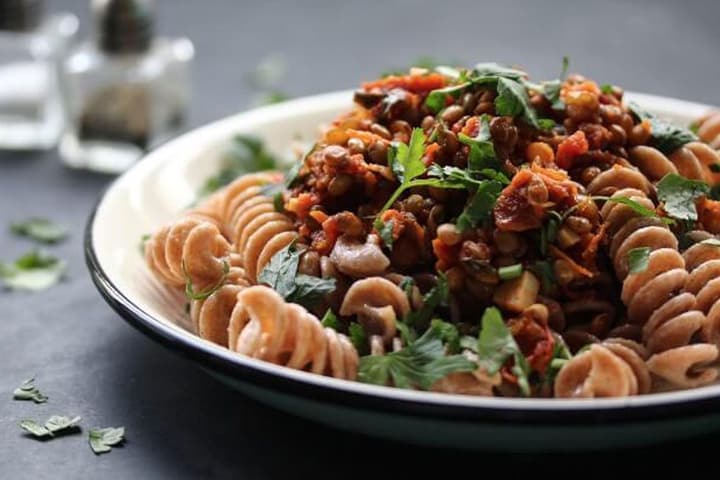
Carb-loading: The theory behind the pasta party
It’s more than just a delicious, social gathering the night before a run. Pasta parties serve a purpose: carb-loading. Heard of it but not sure what carb-loading actually is? Carb-loading is a nutritional performance boosting strategy used 1-2 weeks before a race, during the tapering period. Here the intake of carbohydrates is increased to fill muscle glycogen storage levels and boost a runner’s energy during the event. Since pasta is made of carbohydrates, it’s become known as the ultimate pre-race supper.
How does it work?
By eating foods high in carbohydrates, like pasta, you are filling up your glycogen tanks. These tanks are your body’s fuel supply during a race. Similar to a car burning fuel to make it run, your body burns glycogen, well…also to make it run. Since pasta is a great source of carbohydrates, these get broken down into glucose, which provides the body with the energy it needs in everyday life, to perform sports and especially to be able to run a marathon.
No pasta, no PB?
Once your glycogen stores are empty, it turns to the next best source of energy – fat. However, this fuel doesn’t work as fast and is considered a less-efficient way of producing energy. Ever seen an athlete in the final kilometers of their endurance run, staggering or even collapsing from extreme fatigue? This is often what happens when the body tries to burn fat for fuel. That’s why a big bowl of pasta the evening before a race is recommended – to fill the glycogen tank and prevent you from hitting that dreaded wall.
It’s more than knocking back a big bowl of carbs
The thing with carb-loading is that it’s not enough to simply throw back one big bowl of pasta the night before a run, nor is it a good idea to eat nothing but pasta or white bread for the entire week beforehand. There’s a strategy behind effective carb-loading:
One week before the marathon you should decrease the intensity of your training, sports whilst increasing the intake of carbohydrates. Below is an example of what we mean by this. In our example the week starts on Monday and the Marathon happens on Sunday:
Monday: Training Intensity 90 min, 4g of carbohydrates/kg/bodyweight/day
Tuesday: Training Intensity 40 min, 4g of carbohydrates/kg/bodyweight/day
Wednesday: Training Intensity 40 min, 4g of carbohydrates/kg/bodyweight/day
Thursday: Training Intensity 20 min, 10g of carbohydrates/kg/bodyweight/day
Friday: Training Intensity 20 min, 10g of carbohydrates/kg/bodyweight/day
Saturday: Rest day, 10g of carbohydrates/kg/bodyweight/day – Pasta party
Sunday: Gameday

Is it really necessary for everyone?
So what if you’re not a marathon runner? Can a pasta party or carb-loading still come in useful the evening before a 5k or Freeletics training session? The rule of thumb: You easily have enough glycogen stored in your muscles to last an hour without having to increase your intake of carbs. For races or endurance sports that will last longer than one hour/ninety minutes, then you should consider carb-loading. But be careful: Carb loading is only necessary if you are not able to eat real meals during the race. What to eat during a race? Stay tuned. We’ll cover that topic and many more on a runner’s nutrition in the upcoming articles.